Table of Contents >> Show >> Hide
- Before You Start: Choose the Right Mango
- Understanding the Mango Pit
- 1. The Classic Mango Cheek Method
- 2. The Slice-and-Scoop Method
- 3. The Spoon Method
- 4. The Drinking Glass Method
- 5. The Peel-First Method
- 6. The Mango Splitter Method
- How to Cut Mango for Different Recipes
- How to Store Cut Mango
- Common Mango Cutting Mistakes
- Flavor Ideas for Fresh Mango
- of Real-Life Mango Cutting Experience
- Conclusion
Note: This article is written for a general home-cooking audience. If a young reader is preparing mango, an adult should handle any sharp cutting tools and the reader can help with rinsing, scooping, serving, and cleanup.
Mangoes are sunshine with a peel. They are juicy, fragrant, golden, and somehow able to make a kitchen counter look like a tropical vacation brochure. The only problem? Cutting one can feel like negotiating with a slippery fruit-shaped puzzle. Unlike peaches or plums, mangoes have a long, flat pit running through the center, and the flesh clings to it like it signed a lifetime lease.
The good news is that learning how to cut a mango is not difficult once you understand its shape. You do not need restaurant-level knife skills, a drawer full of gadgets, or a degree in tropical fruit engineering. You simply need a ripe mango, a stable cutting board, a spoon, and a method that matches what you want to make: cubes for salsa, slices for snacking, smooth pieces for smoothies, or elegant wedges for a fruit platter.
Below are six simple ways to prepare a mango, plus practical tips on choosing a ripe fruit, storing cut mango, avoiding mess, and getting the most flesh off that stubborn pit. Mangoes may be dramatic, but with the right approach, they are very manageable drama.
Before You Start: Choose the Right Mango
A good mango-cutting experience begins before the fruit touches the cutting board. The best mango for slicing is ripe but not mushy. Gently press the mango with your fingers. It should give slightly, similar to a ripe avocado or peach. If it feels rock-hard, it may need more time at room temperature. If it collapses under light pressure, it is probably better for smoothies, sauces, or spoon-eating over the sink like a person with excellent priorities.
Do not rely only on color. Mango varieties can be green, yellow, orange, red, or a dramatic sunset blend of all four. Some ripe mangoes stay mostly green, while others turn bright and blushing. Aroma is often more useful: a ripe mango usually smells sweet and fruity near the stem end.
Quick Mango Prep Checklist
- Rinse the mango under cool running water before preparing it.
- Dry it with a clean towel so it is less slippery.
- Use a stable cutting board that does not slide around.
- Have a spoon ready for scooping flesh from the peel.
- Refrigerate cut mango in an airtight container if you are not eating it soon.
Understanding the Mango Pit
The mango pit is not round like a peach pit. It is long, wide, and flat, almost like a paddle hidden inside the fruit. This is why many mango-cutting methods begin by removing the two large “cheeks” from either side of the pit. Once those cheeks are separated, the fruit becomes much easier to cube, slice, scoop, or peel.
Think of the mango as having two broad sides and two narrow sides. The broad sides contain the biggest pieces of flesh. The narrow sides still have fruit too, but they are closer to the pit and often become bonus snacks for the cook. This is the mango tax, and honestly, it is fair.
1. The Classic Mango Cheek Method
The classic cheek method is the most popular way to cut a mango because it is simple, efficient, and works for almost every use. An adult or experienced cook separates the two broad mango cheeks from the pit. Then each cheek can be served as slices, cubes, or scoopable pieces.
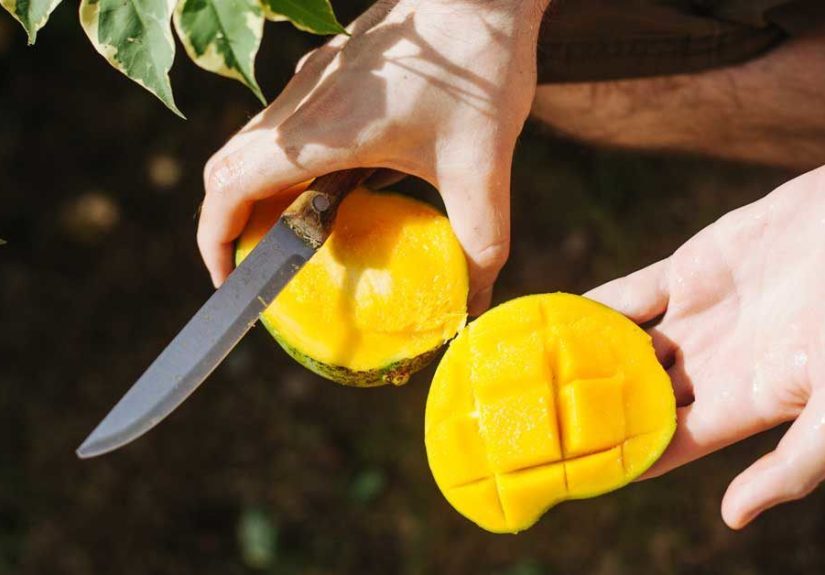
Once the cheeks are ready, place one cheek skin-side down. For cubes, the flesh is lightly scored in a grid pattern without piercing the peel. Then the peel can be gently pushed upward so the cubes pop out like a golden hedgehog. From there, the cubes can be scooped away with a spoon.
This method is ideal for mango salsa, smoothie bowls, fruit salads, yogurt parfaits, and lunch boxes. It keeps the mango mostly contained, which is helpful because ripe mango juice has a special talent for traveling across counters, wrists, and occasionally the floor.
Best Uses for Mango Cubes
- Mango salsa with red onion, cilantro, lime, and jalapeño
- Fresh fruit salad with berries, pineapple, and kiwi
- Smoothie packs for the freezer
- Topping for oatmeal, chia pudding, or Greek yogurt
- Rice bowls with grilled chicken, shrimp, or tofu
2. The Slice-and-Scoop Method
The slice-and-scoop method is perfect when you want clean mango slices instead of cubes. Start with mango cheeks prepared by an adult. Place a cheek skin-side down, then create long strips through the flesh while keeping the peel intact. A spoon can then slide between the fruit and skin to release the slices.
This method is great for breakfast plates, desserts, salads, and fruit trays. Mango slices look polished with very little effort. Arrange them beside strawberries and orange wedges and suddenly your plate looks like it came from a hotel brunch where the coffee costs nine dollars.
Sliced mango is also easier to eat by hand than cubes, especially for kids’ snacks or picnic containers. Add a squeeze of lime and a tiny pinch of chili-lime seasoning for a street-snack-inspired flavor. For a sweeter option, serve mango slices with coconut yogurt, honey, or a sprinkle of toasted coconut.
3. The Spoon Method
The spoon method is the friendliest option for very ripe mangoes. When the mango is soft, trying to make perfect cubes can become a slippery comedy sketch. Instead, use the fruit’s softness to your advantage.
After an adult separates the mango cheeks, hold a cheek over a bowl and scoop the flesh directly from the peel with a large spoon. You may get rustic chunks rather than tidy cubes, but the flavor will be just as good. In fact, very ripe mango is often the sweetest and most aromatic.
This method is best for smoothies, mango lassi, sauces, puree, popsicles, overnight oats, and baking. If the mango is too soft for a fruit platter, do not throw it away. Blend it with yogurt and a little milk for a quick drink, stir it into pancake batter, or freeze spoonfuls on a tray for future smoothies.
When to Use the Spoon Method
- The mango feels very soft but still smells fresh.
- You do not need perfect presentation.
- You are making a blended recipe.
- You want the least fussy cleanup possible.
4. The Drinking Glass Method
The drinking glass method is a clever way to separate mango flesh from peel. It works best after the mango has been divided into large cheek pieces by an adult. Hold a mango cheek with the peel facing outward and use the rim of a sturdy drinking glass to slide between the flesh and skin. The fruit falls into the glass, while the peel stays outside.
This method is popular because it is fast and oddly satisfying. It is also useful when you want larger curved pieces of mango for smoothies or chopping. Choose a strong glass with a smooth rim, not a delicate antique cup from the back of the cabinet. Mango prep should not become a family heirloom crisis.
The glass method works best with ripe but firm mangoes. If the mango is too soft, it may mash instead of sliding cleanly. If it is too firm, the peel may resist. With the right mango, though, this trick can make peeling feel almost magical.
5. The Peel-First Method
The peel-first method is useful when the mango is firm and you want precise pieces. In this approach, an adult removes the peel first, then separates the flesh from the pit and cuts it into the desired shape. This method is often used when presentation matters, such as for mango roses, dessert garnishes, or tidy fruit boards.
Peeling first gives you direct access to the flesh, but it also makes the mango more slippery. That is why this method is better for firm mangoes than very ripe ones. A very soft peeled mango can behave like a bar of soap with tropical ambitions.
Once peeled, the mango can be shaped into slices, strips, cubes, or thin ribbons. Firm mango slices are excellent in green salads, spring rolls, slaws, grain bowls, and chutneys. Slightly underripe mango can also be used in savory dishes because its tartness balances salt, spice, and richness beautifully.
6. The Mango Splitter Method
A mango splitter is a kitchen tool designed to separate the pit from the two cheeks in one motion. It looks a bit like an apple slicer but is shaped for mangoes. This can be helpful for people who prepare mango often and want a consistent shortcut.
The main advantage is convenience. Once the splitter removes the cheeks, you can use the scoop, slice, cube, or glass method to finish the fruit. The downside is that mangoes vary in size and pit shape, so a splitter is not always perfect. It may leave extra fruit around the pit, which you can still scoop off and enjoy.
If you eat mango once a year, you probably do not need a special tool. If your household treats mangoes like a weekly food group, a splitter may earn its drawer space. Just remember that simple tools still need careful handling and cleaning.
How to Cut Mango for Different Recipes
For Mango Salsa
Use the classic cheek method and make small cubes. Smaller pieces mix better with onion, cilantro, lime juice, jalapeño, cucumber, or bell pepper. Mango salsa is excellent with tortilla chips, grilled fish, tacos, chicken, or black bean bowls.
For Smoothies
Use the spoon method or glass method. Perfect shapes do not matter because the blender will erase all evidence. Freeze mango pieces on a parchment-lined tray first, then transfer them to a freezer bag so they do not become one giant mango iceberg.
For Fruit Platters
Use the slice-and-scoop method with ripe but firm mangoes. Long slices look elegant and are easier to arrange. Add lime wedges on the side to brighten the flavor.
For Salads and Bowls
Use slices or medium cubes. Mango pairs well with avocado, cucumber, red cabbage, mint, basil, cilantro, shrimp, salmon, chicken, tofu, quinoa, and jasmine rice. Its sweetness balances spicy dressings and salty toppings.
How to Store Cut Mango
Cut mango should be stored in an airtight container in the refrigerator if it is not eaten right away. For best flavor and texture, use refrigerated mango within a few days. If you want to keep it longer, freeze it.
To freeze mango, spread pieces in a single layer on a tray until firm, then transfer them to a freezer-safe bag or container. This keeps the pieces from clumping together. Frozen mango is perfect for smoothies, sorbet, sauces, and quick desserts. It may be softer after thawing, so it is less ideal for fruit platters but wonderful for blended recipes.
Common Mango Cutting Mistakes
Using an Unripe Mango for Sweet Recipes
An unripe mango can be tart, crunchy, and less juicy. That is not always bad; firm mango is excellent in slaws and savory dishes. But for sweet snacking, smoothies, and desserts, let the fruit ripen until it gives slightly under gentle pressure.
Skipping the Rinse
Even though you do not eat the peel, the outside of the mango should still be rinsed before preparation. Dirt or bacteria on the peel can transfer to the edible flesh during cutting or handling.
Trying to Remove the Pit Like a Peach
Mango pits do not pop out neatly. They are flat and clingy. Work around the pit rather than fighting it. The mango will win the wrestling match, and your counter will pay the price.
Throwing Away the Fruit Around the Pit
The pieces around the pit may not look pretty, but they are delicious. Scoop or nibble the extra fruit away and use it in smoothies, sauces, or as the cook’s reward.
Flavor Ideas for Fresh Mango
Fresh mango is wonderful on its own, but it also loves bold flavors. Lime juice makes it taste brighter. Chili powder adds gentle heat. Mint makes it feel refreshing. Coconut turns it dessert-like. Salt, used lightly, can make the sweetness pop.
- Sweet: mango, coconut milk, vanilla yogurt, honey
- Spicy: mango, lime, chili powder, sea salt
- Fresh: mango, cucumber, mint, lime
- Savory: mango, avocado, red onion, cilantro
- Tropical: mango, pineapple, banana, passion fruit
of Real-Life Mango Cutting Experience
The first thing experience teaches you about cutting mango is that confidence matters, but humility matters more. A mango looks smooth and innocent on the counter, yet the moment it is ripe, rinsed, and ready, it becomes slippery enough to qualify for a tiny fruit Olympics. That is why the best mango prep starts with patience. Dry the fruit well. Clear the counter. Put a bowl nearby. Do not begin while also answering a text, chasing the dog away from the kitchen, or pretending you are on a cooking competition show with eight seconds left.
In everyday home cooking, the classic cheek method is usually the most reliable. It gives you the biggest pieces and leaves the peel as a natural holder. For a quick breakfast, mango cheeks scored into cubes are hard to beat. You can scoop them over yogurt, toss them onto oatmeal, or eat them directly while standing in front of the refrigerator. No judgment. Some of the finest meals in human history have happened with one hand on the fridge door.
For meal prep, the glass method can be surprisingly useful. It is especially handy when preparing several mangoes at once for smoothies. Once the large cheek pieces are ready, the glass helps separate the flesh quickly, and the pieces can go straight into a container or freezer tray. The trick is choosing the right ripeness. A mango that is slightly soft but still structured will slide away from the peel beautifully. A mango that is too soft may collapse into puree, which is not a disaster if smoothies are the plan. It is only a disaster if you promised guests elegant fruit slices.
The spoon method is the quiet hero of mango prep. It does not care about perfect shapes. It does not require the mango to behave. It simply says, “Come here, delicious fruit, you are going into this bowl.” This is the method to use when a mango ripens faster than expected. Maybe it sat beside bananas. Maybe your kitchen was warm. Maybe time is fake and mangoes know it. Whatever happened, spooned mango can become a sauce, a drink, a frozen treat, or a topping in minutes.
One practical lesson is to match the cut to the recipe. Small cubes are best for salsa because they distribute evenly in every bite. Long slices are best for fruit boards because they look clean and intentional. Rustic chunks are best for smoothies because the blender has no interest in your geometry. Firm strips are great in salads because they hold their shape. Once you stop trying to use one method for every mango situation, preparation gets easier.
Another useful habit is saving the less-pretty pieces. The fruit close to the pit is often awkward, fibrous, or uneven, but it still has flavor. Add those scraps to a smoothie bag, stir them into yogurt, or simmer them briefly with lime juice for a quick topping. Mango waste is tragic, especially when the “scraps” taste like candy wearing a vitamin costume.
Finally, remember that mango cutting does not need to be perfect. The goal is not to impress a panel of imaginary fruit judges. The goal is to enjoy the mango safely, neatly enough, and without losing half of it to the cutting board. Whether you cube it, scoop it, slice it, peel it, split it, or slide it with a glass, the reward is the same: sweet, golden fruit that makes breakfast, snacks, desserts, and savory meals taste brighter.
Conclusion
Learning how to cut a mango becomes simple once you stop treating it like a peach and start respecting the long, flat pit inside. The classic cheek method is best for cubes, the slice-and-scoop method is ideal for fruit platters, the spoon method saves very ripe mangoes, the glass method speeds up peeling, the peel-first method works well for firm fruit, and a mango splitter can help frequent mango fans move faster.
Wash the mango before preparing it, choose a ripe fruit based on feel and aroma rather than color alone, and store cut mango properly in the refrigerator. Most importantly, choose the method that fits your recipe. Mango is flexible, forgiving, and delicious even when the pieces are not perfect. In other words, it is the rare kitchen project where messy can still taste magnificent.