Table of Contents >> Show >> Hide
- Why Gardens Lose Steam in Late Summer
- Choose Plants That Peak When the Rest of the Garden Pauses
- Use Foliage Like It Is Doing Half the Job
- Design Tricks That Make a Garden Look Colorful Longer
- Maintenance Habits That Keep Color Coming
- Best Late-Summer Plant Combinations to Try
- Common Mistakes That Shorten the Show
- How to Plan Next Year’s Late-Summer Garden Now
- Experience and Practical Lessons From Real Late-Summer Gardens
- Conclusion
By late summer, a lot of gardens look like they’ve just finished a marathon in bad shoes. The spring stars are gone, early summer bloomers are tired, and everything that once looked lush now seems slightly offended by heat, humidity, drought, or all three. But here’s the good news: a sleepy August border does not mean your garden has given up on life. It usually just means your planting plan needs more late-season performers.
If you want bold color when the weather is sticky, the hose is working overtime, and your hydrangea is acting dramatic, the secret is not one miracle plant. It is a combination of smart timing, long-blooming flowers, colorful foliage, reliable containers, and a few maintenance habits that keep plants producing instead of sulking. Late-summer color is less about luck and more about strategy.
This guide walks you through how to keep your garden vibrant when many landscapes start fading. We’ll cover the best late-summer flowers, the role of foliage and grasses, easy design tricks, and the maintenance habits that help your garden look fresh well past midsummer.
Why Gardens Lose Steam in Late Summer
Before fixing the problem, it helps to know why it happens. Many gardens are designed around spring and early summer excitement. Garden centers are full of irresistible bloomers in April and May, so gardeners naturally buy what looks great right now. Then July and August arrive, and the planting scheme reveals its plot twist.
Some perennials bloom gloriously for a few weeks and then go quiet. Annuals may slow down when they dry out or stop flowering if spent blooms are left in place. Containers can become root-bound and thirsty. Foliage may burn, mildew may show up like an uninvited relative, and anything planted without a plan for succession starts looking tired.
That is why the best late-summer gardens are layered. They do not rely on one bloom period. They mix plants that flower at different times, combine flowers with foliage and texture, and include species that actually enjoy the heat instead of writing complaint letters about it.
Choose Plants That Peak When the Rest of the Garden Pauses
The fastest route to late-summer garden color is adding plants that naturally bloom from August into fall. Think of them as your garden’s closing band, not the opening act.
Top Perennials for Late-Summer Color
Asters are among the best late-season stars. They bring shades of lavender, purple, blue, pink, and white just when most borders need a recharge. They also pair beautifully with warm yellows and bronze foliage.
Goldenrod is another standout, and it deserves a public relations makeover. It often gets blamed for fall allergies, but ragweed is usually the real culprit. In the garden, goldenrod provides brilliant yellow flower sprays that look especially good with asters. Together, they create one of the classic late-summer color combinations.
Upright sedums, especially the types often sold as Autumn Joy or similar stonecrops, earn their place because they offer more than one moment of beauty. Their fleshy foliage looks neat early in the season, their flower heads open in pink tones, then deepen into richer brick and russet shades as the season progresses.
Rudbeckia, commonly called black-eyed Susan, is the cheerful extrovert of the border. It brings bright yellow and gold tones for weeks and can keep blooming well with regular cleanup.
Coneflowers, Joe-Pye weed, gaillardia, Russian sage, Japanese anemones, and hardy hibiscus also help extend the display, depending on your climate and garden conditions. If you want late-summer color that also supports pollinators, this group is especially useful.
Annuals That Keep Throwing Confetti
If perennials are your long-term investment, annuals are your emergency color department. They grow fast, bloom hard, and save tired spaces with very little ceremony.
Zinnias are garden overachievers. They come in nearly every warm and candy-bright shade imaginable, bloom for months, and attract butterflies. Cut them, deadhead them, admire them, repeat.
Cosmos bring airy movement and a lighter texture, which is useful if your garden is starting to look visually heavy. They mix well with zinnias, salvias, and ornamental grasses.
Lantana, angelonia, salvia, gomphrena, celosia, marigolds, calibrachoa, petunias, and Mexican sunflower are all excellent for hot-weather color. Many of these thrive when temperatures climb and keep going right into early fall.
If your beds look tired by late July, slipping in a few sturdy annuals can make the whole garden look intentional again. It is basically cosmetic surgery for flower borders, but friendlier and with bees.
Use Foliage Like It Is Doing Half the Job
Actually, foliage should be doing half the job. One of the biggest mistakes gardeners make is thinking color only comes from flowers. In late summer, foliage often carries the garden more reliably than blooms do.
Coleus adds saturated reds, chartreuse, burgundy, lime, copper, pink, and near-black tones. It is especially helpful in partial shade, where flower options can be more limited.
Caladiums brighten shady corners with bold leaves in white, red, pink, and green. They can keep containers and beds colorful all the way to frost in many regions.
Heuchera, sweet potato vine, cordyline, and elephant ears can all add structure and leaf color when flowers are resting between flushes.
And then there are ornamental grasses, the quiet geniuses of late-season design. Little bluestem, prairie dropseed, Indian grass, and other grasses add movement, seed heads, and fall-tinted foliage that glows in slanting evening light. They also help tie flower colors together, which is useful when your garden has become a little too enthusiastic with orange, pink, yellow, and purple all sharing the same zip code.
Design Tricks That Make a Garden Look Colorful Longer
Plant choice matters, but layout matters just as much. A garden with average plants and good design often outperforms a garden with great plants and no plan.
Plant in Drifts, Not Lonely Singles
Late-summer flowers look stronger when grouped in repeating drifts or clusters. One aster is a plant. Five asters are a statement. Repeating color through a bed gives the eye something to follow and makes the whole garden feel more polished.
Mix Flower Shapes and Textures
Pair daisy-like blooms with spiky flowers, airy grasses, broad leaves, and mounded forms. For example, asters beside sedum, little bluestem, and coleus create contrast in shape, height, and texture. That contrast is what makes a border look rich instead of flat.
Build Around Color Partnerships
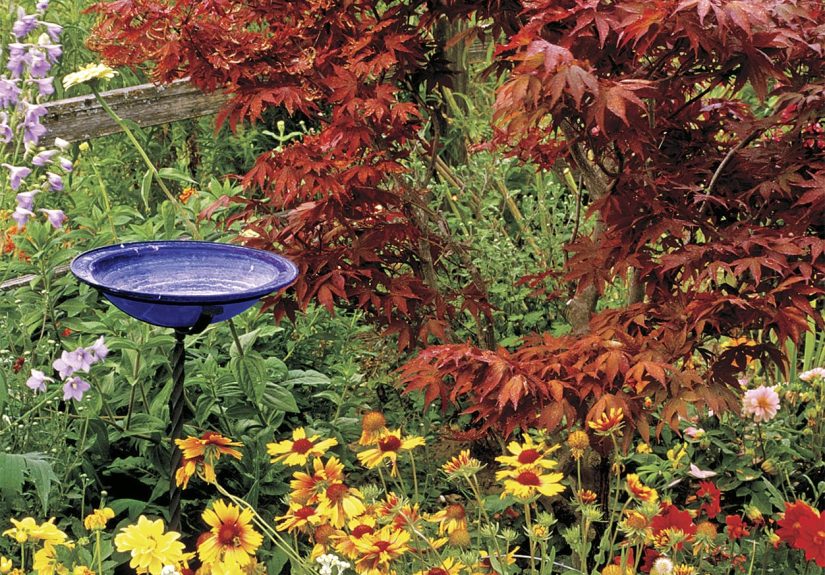
Late summer is the season of high-impact combinations. Purple asters with goldenrod are classic. Orange zinnias with blue salvia are lively and bold. Pink sedum with burgundy coleus feels more refined. Yellow rudbeckia with ornamental grass is warm, sunny, and easy to love.
Pick two or three dominant colors and repeat them. Otherwise, your garden may start looking like a paint store exploded in a wheelbarrow.
Save Space for Containers
Containers are one of the smartest ways to boost late-summer color because they are flexible. If a border fades, a bright pot of lantana, angelonia, coleus, or calibrachoa can be placed exactly where the eye needs help.
A reliable container formula is the classic thriller, filler, spiller approach. Use one tall focal plant, one mounded plant to fill the middle, and one trailing plant to soften the edge. For late summer, a combination like ornamental grass, lantana, and trailing coleus or calibrachoa can look full, fresh, and dramatic in a hurry.
Maintenance Habits That Keep Color Coming
Even the best plant palette needs a little help in late summer. Fortunately, the most effective garden chores are not glamorous, but they work.
Deadhead the Plants That Benefit
Deadheading removes spent blooms before the plant shifts fully into seed-making mode. Many annuals and repeat-blooming perennials respond by producing more flowers. Zinnias, roses, rudbeckia, some salvias, and many container annuals all benefit.
That said, not every plant needs it. Some are self-cleaning, and some are worth leaving for seed heads or fall structure. This is where gardening becomes less “follow every rule” and more “know your cast.”
Water Deeply and Smartly
Late-summer gardens often fail because they are thirsty, not because they are finished. Water early in the day whenever possible so the soil absorbs moisture before the heat ramps up. Deep watering is generally better than frequent shallow sprinkles. Containers dry out far faster than beds, so do not be surprised if pots need daily watering in hot weather.
Mulch Like You Mean It
A good layer of mulch helps conserve moisture, moderate soil temperature, and suppress weeds. In late summer, that matters a lot. Less plant stress means better foliage, cleaner blooms, and fewer dramatic collapses at 4 p.m.
Feed Containers More Consistently Than Beds
Containers are heavy performers, and they use up nutrients quickly. A light feeding routine can keep blooming annuals productive. In-ground beds usually need less fuss, especially if the soil is already rich. Avoid overfertilizing stressed plants, though. A thirsty plant does not want an energy drink.
Trim for a Fresh Flush
Some annuals respond well to a light haircut when they get leggy. Petunias, calibrachoa, and even impatiens can rebound nicely after a trim and some care. For future seasons, remember that midsummer pinching or cutting back certain plants such as asters or mums can help keep them bushier and blooming at the right time.
Best Late-Summer Plant Combinations to Try
Sunny Border Combo
Asters, goldenrod, sedum, rudbeckia, and little bluestem create a border with bloom, structure, and movement. This combination looks good in bright afternoon light and stays interesting even after some flowers fade.
Hot-Color Cottage Mix
Zinnias, Mexican sunflower, gomphrena, orange cosmos, and purple salvia create nonstop energy. This mix is cheerful, pollinator-friendly, and ideal for gardeners who believe subtlety is overrated.
Shady Late-Summer Refresh
Caladium, coleus, tuberous begonias, heuchera, and a few light-colored containers can revive a dim area where flowers alone may not carry the show.
Front-Porch Rescue Plan
Use a container with a grass or cordyline as the thriller, lantana or angelonia as the filler, and trailing coleus, sweet potato vine, or calibrachoa as the spiller. Instant late-summer confidence.
Common Mistakes That Shorten the Show
One common mistake is planting only for spring and early summer. Another is forgetting foliage and relying on flowers to do all the work. Many gardeners also crowd too many different colors into one bed, which weakens the visual effect instead of strengthening it.
Skipping deadheading can shorten bloom time on many plants. Letting containers dry out can cause flowers to stall fast. And choosing plants without checking light conditions is the classic garden heartbreak: putting a full-sun bloomer in shade and then wondering why it looks like it needs therapy.
How to Plan Next Year’s Late-Summer Garden Now
The best time to improve late-summer color is while your current garden is still telling the truth. Walk through the yard in August and September and notice where color drops off, where foliage burns, and where the eye needs a focal point.
Take photos. Mark empty stretches. Note which corners need more height, which beds need brighter tones, and which containers deserve a completely new cast next year. Then add late-season bloomers and foliage stars where they are missing.
Think in layers: spring bulbs, early perennials, midsummer bloomers, late-summer perennials, annual boosters, and grasses or foliage plants for structure. That is how a garden keeps performing instead of peaking once and then taking a nap.
Experience and Practical Lessons From Real Late-Summer Gardens
Anyone who has gardened through late summer for more than one season learns a few things the hard way. The first is that August is brutally honest. In May, nearly everything looks promising. In August, only the plants that truly like your site, your soil, and your level of attention are still smiling. That is why late-summer color feels so satisfying. It is not just pretty; it is proof that your garden plan actually works.
One of the most common experiences gardeners talk about is the surprise of how much better repeated color looks than scattered color. A single bright zinnia tucked here and there can seem random. A drift of zinnias repeated in a bed looks deliberate and abundant. The same is true with asters, rudbeckia, and even coleus. Once you see the difference, it becomes much easier to edit the garden and stop buying one of everything with petals.
Another big lesson is that containers save the season. When a border has a gap, a tired patch, or an awkward stretch between bloom cycles, a well-grown pot can fix the problem almost instantly. Gardeners who keep a few extra late-summer annuals in nursery pots or spare containers often end up looking like geniuses by Labor Day. In reality, they are just prepared. A pot of angelonia and calibrachoa near the front walk can make the whole entrance feel refreshed, even if the rest of the bed is between performances.
There is also the matter of foliage, which many gardeners underappreciate until flowers start fading. Late summer teaches you to love leaves. Coleus becomes a hero. Caladium becomes a spotlight. Heuchera becomes the plant you should have used more often. Once blooms become less constant, leaf color and texture start carrying the design. That shift changes how experienced gardeners shop, because they stop asking only, “What color does it flower?” and start asking, “What does it look like in August when everything else is tired?”
Then there is watering, the great humbler of summer gardening. Most gardeners eventually realize that consistency matters more than heroic rescue missions. Plants that get even moisture tend to bloom longer, hold foliage better, and recover faster from heat. Containers especially teach this lesson with zero mercy. Miss a day during a heat wave and your gorgeous porch planter may look like it has been through a breakup.
Perhaps the most encouraging experience of all is discovering that late-summer gardens do not need to be complicated to be beautiful. A few dependable perennials, some bold annuals, a couple of foliage plants, and one or two ornamental grasses can create a display that feels generous and full. You do not need a botanical garden budget. You need repeat performers, a little editing, and the willingness to think beyond spring. Once you start gardening for late summer on purpose, it becomes one of the most rewarding parts of the whole season. The light is softer, the colors are richer, the pollinators are busy, and the garden feels like it has found its second wind. That is not the end of the show. That is the encore.
Conclusion
If you want a garden that still looks lively when summer starts dragging its feet, build for succession, not just a single burst of bloom. Add reliable late-summer perennials, use annuals for flexible color, lean on foliage and ornamental grasses for structure, and keep up with practical care like watering, deadheading, and light trimming. Do that, and your garden will keep glowing when neighboring beds are already waving the white flag.
Late-summer color is not a gardening miracle. It is a gardening method. And thankfully, it is one that looks very impressive from the patio.