Table of Contents >> Show >> Hide
- Why the John Cleese Roast Had Such High Expectations
- What Went Wrong With The Roast of John Cleese?
- The Strange Problem of Roasting a Comedy Legend
- What the Roast Revealed About Modern Comedy
- John Cleese Was Not the DisasterThe Format Was
- How the Roast Could Have Worked Better
- The Bigger Lesson: Comedy Legends Need Better Send-Ups
- Experiences and Takeaways: Watching a Roast Go Sideways
- Conclusion
The problem with roasting John Cleese is that John Cleese has already spent more than half a century roasting everyone elsegovernments, institutions, television manners, hotel guests, French knights, pompous officials, and, very often, himself. So when The Roast of John Cleese arrived on Australian television, the basic promise sounded delicious: place one of comedy’s sharpest old swords on a throne, surround him with professional comics, and watch the sparks fly.
Instead, the special became a fascinating example of how a comedy roast can go wrong even when the guest of honor is almost impossible to ruin. Cleese, best known for Monty Python’s Flying Circus and Fawlty Towers, has a legacy so large it practically needs its own customs declaration. Yet the roast often felt less like a fearless tribute to a comedy titan and more like a polite awards dinner that accidentally wandered into a casino wearing boxing gloves.
Was it truly a “total disaster”? As entertainment criticism, that phrase is partly comic exaggeration. Nobody’s television exploded. No one had to evacuate the building. But as a roast, the show struggled with the one thing a roast must absolutely do: make the target feel central, vulnerable, loved, and hilariously attacked. The result was awkward, uneven, and strangely timidlike watching a sword fight where everyone agreed beforehand not to touch the swords.
Why the John Cleese Roast Had Such High Expectations
John Cleese is not merely “a funny British actor.” He is one of the architects of modern absurdist comedy. His work with Monty Python helped turn sketch comedy into something wilder, stranger, and more intelligent. Monty Python and the Holy Grail, Life of Brian, and The Meaning of Life became staples for people who like their jokes surreal, literate, and occasionally shouted by men in armor.
Then came Fawlty Towers, the sitcom equivalent of a perfectly engineered nervous breakdown. Cleese’s Basil Fawlty is arrogant, frantic, petty, snobbish, and catastrophically bad at hospitality. In other words, he is funny because he is awful in such a precise way. The show ran for only 12 episodes, but its influence lasted for decades because every episode feels wound like a clock and detonated like a small hotel-shaped bomb.
That history matters because a roast depends on shared knowledge. The audience needs to understand why the roastee matters. With Cleese, the material should have written itself: the towering ego, the furious physical comedy, the famous marriages, the “cancel culture” commentary, the late-career controversies, the beloved old work, the less-beloved newer work, and the eternal danger of being a comedy legend whose best punchlines are older than many viewers’ parents.
What Went Wrong With The Roast of John Cleese?
1. The Roast Lacked Personal Chemistry
The best roasts feel dangerous because the performers have history with the guest of honor. When friends, rivals, collaborators, and former colleagues step up to the microphone, the insults carry emotional weight. A joke about age is easy. A joke about a shared disaster from 30 years ago is gold.
That was one of the biggest weaknesses of The Roast of John Cleese. The lineup featured Australian comedians and entertainers rather than Cleese’s closest creative peers. Some were funny performers in their own right, but the relationship gap was hard to ignore. A roast without deep personal connection can still work, but it needs sharper writing, clearer structure, and a stronger sense that everyone onstage knows exactly why this particular person deserves this particular treatment.
Instead, much of the comedy drifted toward generic roast territory: jokes about Cleese being old, jokes about his marriages, jokes about Britishness, jokes about Australia, and jokes about the people sitting nearby. The problem was not that those topics are forbidden. The problem was that they were often predictable. A comedy legend deserves better than material that feels like it was assembled from the first page of a brainstorming document labeled “Old British Man.”
2. It Felt More Like a Variety Special Than a Roast
A roast has a clear gravitational center. Every joke should orbit the guest of honor. The host may be mocked. The roasters may attack one another. The room may become a friendly war zone. But the audience always knows who is being honored by being publicly destroyed.
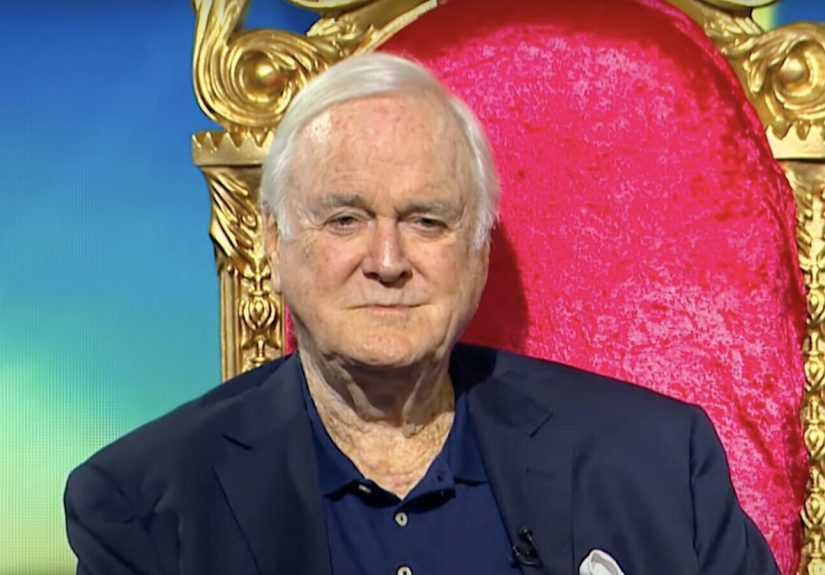
Here, the focus wobbled. At times, the roasters seemed more interested in teasing each other than in taking Cleese apart. That can be funny in short bursts, but if too much attention moves away from the central figure, the whole format loses its teeth. Viewers tuned in for John Cleese. They did not necessarily tune in for a rotating panel of people trading side jokes while Cleese sat nearby like a museum exhibit with excellent posture.
The show’s framing also softened the impact. There was plenty of tribute energy, which is understandable. Cleese is a giant. But roast comedy needs tension. It must balance admiration with aggression. If the admiration becomes too obvious and the aggression too careful, the result feels like a retirement banquet where someone occasionally says “you’re old” into a microphone.
3. The Writing Was Too Safe for the Subject
John Cleese’s own comedy has never been famous for timidity. His best work is built on escalation: a silly premise becomes absurd, then hostile, then completely unhinged. Basil Fawlty does not merely become frustrated; he becomes a one-man natural disaster. Python sketches do not simply make a point; they sprint into nonsense while wearing a tie.
That is why the roast’s safer material felt especially disappointing. Cleese has spent recent years arguing about free speech, political correctness, and the changing boundaries of comedy. Whether one agrees with him or not, that public persona practically begs for clever, specific, risky jokes. A strong roast could have explored the tension between the fearless young Python and the older comic who now often sounds like he is trapped in an argument with the internet.
Instead, the sharpest opportunities were often left sitting on the table, untouched and quietly embarrassed. A great roast would have made Cleese defend his own mythology. It would have asked: What happens when the man who helped reinvent comedy becomes a symbol of comedy’s generational arguments? That is rich territory. The special mostly brought a shovel, looked at the territory, and decided to dig in the sandbox instead.
The Strange Problem of Roasting a Comedy Legend
To be fair, roasting John Cleese is not easy. Comedy legends create a special problem: everyone wants to honor them, nobody wants to look cruel, and many performers are afraid of appearing disrespectful. The bigger the figure, the more pressure there is to behave. Unfortunately, “behave” is one of the least useful words in comedy.
Cleese’s reputation also makes the assignment harder. He is not a pop star with a handful of public scandals and a few obvious jokes. He is a writer-performer whose legacy spans British satire, film comedy, sitcom history, voice work, memoirs, tours, and public debates about humor itself. To roast him properly, a writer needs more than a Wikipedia skim. The jokes must understand why Cleese matters and why he can also be frustrating.
The best possible version of the show would have treated Cleese as both monument and target. It would have celebrated Fawlty Towers while mocking the absurdity of living forever in the shadow of 12 episodes. It would have praised Python while joking that half the audience quotes it like scripture and the other half pretends to understand it at parties. It would have teased Cleese’s free-speech crusading without turning the segment into a lecture. Most importantly, it would have sounded like it was written for John Cleese, not merely near John Cleese.
What the Roast Revealed About Modern Comedy
The failure of The Roast of John Cleese was not just about one television special. It revealed a larger problem with modern roast culture: the format is easy to imitate but difficult to execute. Put people at a podium, add a famous person, sprinkle in insults, and the event looks like a roast. But the appearance is not the art.
A true roast needs permission, precision, and escalation. Permission means the room understands that the cruelty is affectionate. Precision means the jokes are specific enough to feel earned. Escalation means each speaker raises the comic temperature instead of repeating the same easy targets.
When those ingredients are missing, the format becomes oddly uncomfortable. Not offensive. Not shocking. Just limp. And limp comedy is worse than offensive comedy because at least offensive comedy wakes the room up. Limp comedy leaves everyone staring at the carpet, wondering whether the next joke will be about birthdays, wrinkles, or how British people drink tea.
John Cleese Was Not the DisasterThe Format Was
One important distinction: John Cleese himself was not the problem. By most accounts, he played along, laughed at the stronger jokes, and accepted the premise with good humor. That matters. A roast can collapse completely if the guest of honor looks wounded or hostile. Cleese did not seem unable to take a joke. If anything, the special’s weakness was that too few jokes landed hard enough for him to take.
The production had all the visual signs of a big event: a throne, a stage, a lineup, and a legendary guest. But comedy is not furniture. A gold chair does not make a joke sharper. A famous name does not automatically create electricity. The show needed deeper research, bolder writing, and roasters with stronger personal or creative ties to Cleese’s world.
That is why the phrase “total disaster” sticks. The disaster was not that the special was unwatchable from beginning to end. There were scattered laughs. There were professional performers doing professional work. The disaster was the gap between what the event could have been and what it became. With a subject like Cleese, “occasionally amusing” feels like a defeat.
How the Roast Could Have Worked Better
Bring in People With History
A stronger roast would have included former collaborators, British comics influenced by Cleese, American comedians raised on Python, and maybe even performers who openly disagree with his recent opinions. The key is not celebrity volume; it is relevance. One person with a genuine relationship to Cleese could have produced more memorable comedy than five people reading polished but impersonal jabs.
Make the Jokes Specific
Specificity is the soul of roast comedy. “You are old” is a joke skeleton. “You are old enough to remember when the Ministry of Silly Walks had government funding” is at least wearing a hat. The best Cleese jokes would have drawn from his actual career: Python sketches, Fawlty Towers episodes, film choices, public feuds, memoir material, and the strange experience of becoming an anti-woke talking point while forever associated with a show that mocked fools, snobs, racists, bureaucrats, and blowhards.
Let the Tribute Hide Inside the Attack
A great roast says “we love you” by pretending to say “we can’t stand you.” The affection should be visible only after the laughter lands. Too much open admiration weakens the bite. Too much cruelty weakens the tribute. The Roast of John Cleese often leaned too heavily toward ceremony, which made the insults feel decorative rather than dangerous.
The Bigger Lesson: Comedy Legends Need Better Send-Ups
Comedy history deserves sharper celebration. John Cleese is not just a famous older actor; he is a performer whose work helped shape how audiences understand absurdity, farce, sketch comedy, and sitcom construction. A roast of Cleese should have been an event about legacy, ego, fearlessness, aging, reputation, and the strange cruelty of being remembered too well for your younger self.
Instead, it became a warning. Do not roast a legend unless you are prepared to do the homework. Do not rely on age jokes when the subject helped invent modern comic rhythms. Do not invite viewers to expect danger and then serve them room-temperature politeness with a garnish of mild embarrassment.
The special also proved that “edgy” and “effective” are not the same thing. A joke can mention taboo subjects and still be lazy. A joke can be gentle and still be brilliant. The missing ingredient is not cruelty. It is craft. Cleese’s best work endures because it is crafted within an inch of its life. The roast needed more of that spirit: less random insult, more comic architecture.
Experiences and Takeaways: Watching a Roast Go Sideways
Watching The Roast of John Cleese feels a little like attending a dinner party where everyone has been told the guest of honor is dangerous, brilliant, controversial, and historically importantthen watching the speeches focus mostly on his age and how many candles would be required for his birthday cake. You wait for the savage moment. You wait for the joke that makes the room gasp. You wait for the clever turn that reminds you why roasts can be thrilling. And then, too often, the show politely changes lanes before the comedy reaches full speed.
The experience is especially strange if you grew up watching Cleese at his best. A viewer familiar with Fawlty Towers expects comic pressure. Basil Fawlty does not drift through a scene; he combusts. Every lie creates another lie. Every insult creates a worse consequence. Every social rule becomes a trapdoor. That is why the roast’s loose rhythm feels so underpowered. It has the appearance of danger, but not the machinery.
There is also a lesson here for anyone planning a roast, tribute, panel, podcast, or live comedy event. The audience can tell when the performers do not have enough personal material. They can feel when the jokes are interchangeable. If a line about John Cleese could be swapped into a roast of any elderly celebrity with only three words changed, the line is not strong enough. Comedy audiences may forgive roughness, but they rarely forgive vagueness.
Another experience the special capturesperhaps accidentallyis the awkwardness of generational comedy. Cleese belongs to an era when television comedy could feel theatrical, literary, and gleefully anarchic. Contemporary roast comedy, especially televised roast comedy, often leans on quick insults, social media-ready clips, and obvious personal facts. Put those traditions together without a strong editorial vision, and the result can feel like two comedy languages speaking past each other.
Still, the roast is worth discussing because failure can be more educational than success. A brilliant roast disappears into laughter; a weak roast reveals the scaffolding. Here, we can see exactly what was missing: personal stakes, bold specificity, disciplined structure, and a willingness to challenge Cleese’s public image without merely recycling familiar complaints. The show reminds writers that comedy is not just saying rude things. It is choosing the right rude thing, at the right time, about the right person, with enough truth underneath that the audience laughs before it can decide whether to be shocked.
In the end, The Roast of John Cleese was not a total disaster because it harmed Cleese’s legacy. His legacy is safe. It survived dead parrots, silly walks, hotel fires, angry Germans, and decades of people quoting Python sketches at parties with varying levels of accuracy. The real disaster was creative: a rare chance to roast one of comedy’s great architects turned into a mild evening of missed opportunities. For a man who built a career on comic explosions, this roast produced more smoke than fire.
Conclusion
The Roast of John Cleese should have been a glorious collision between reverence and ridicule. Instead, it became a case study in how not to roast a legend. The guest was worthy. The premise was promising. The comedy, however, often lacked the specificity and nerve needed to match Cleese’s towering reputation.
That does not mean every joke failed or every performer missed. It means the special never fully became the sharp, affectionate, fearless event its title promised. Roasting John Cleese required the precision of Fawlty Towers, the absurd courage of Monty Python, and the emotional confidence to laugh at a legend without bowing every five seconds. What viewers got was lighter, safer, and far less memorable.
So yes, calling it a “total disaster” may sound dramatic. But in comedy, missed potential is its own kind of disaster. When the target is John Cleese, merely getting a few chuckles is not enough. The man deserved a roast with teeth. Instead, he got one that mostly gummed at his ankles.