Table of Contents >> Show >> Hide
- The Video Is Short, but the Story Behind It Is Big
- What Is the Crotale NG, Exactly?
- Why One Intercept Matters So Much
- The Bigger Problem: Russia Keeps Changing the Air Threat
- France’s Role in Ukraine’s Air Defense Story
- What the Footage Does Not Show
- What This Intercept Feels Like on the Ground
- Conclusion
Some war footage is loud, chaotic, and impossible to process in one sitting. This clip is different. It is short, focused, and brutally clear. A Russian cruise missile appears in the sights, one interceptor misses, the second races in, and then the sky flashes. Inside the Ukrainian vehicle, the crew erupts. It is not polished. It is not cinematic. It is not trying to be. But it captures something modern warfare often hides behind maps and acronyms: air defense is a race measured in seconds, nerves, and one very expensive bad decision made by the missile that wandered into the wrong neighborhood.
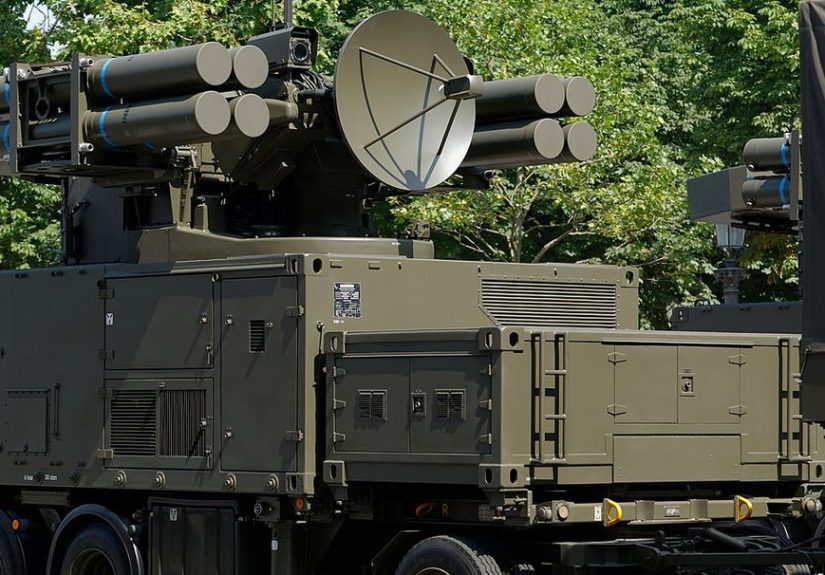
The battery in question is the French-made Crotale NG, a short-range air defense system that Ukraine received as part of Western military support. On paper, it is a compact shield designed to protect a local area from low-flying aircraft, drones, and cruise missiles. In practice, it is one more piece in Ukraine’s increasingly improvised, increasingly capable, and increasingly overworked air-defense puzzle. That is what makes the footage compelling. It is not just a clip of one missile getting blown out of the sky. It is a tiny window into how Ukraine has stayed alive under relentless aerial attack.
The Video Is Short, but the Story Behind It Is Big
The now widely discussed footage appears to show a Ukrainian Crotale crew engaging a Russian cruise missile. The first launch does not connect. The second does. That detail matters because it makes the scene feel real rather than promotional. This is not a flawless video-game kill shot. It is exactly what actual air defense looks like: fast, messy, high-stakes, and expensive enough to make every operator silently recalculate their life choices in real time.
That apparent intercept was significant because it marked one of the clearest public examples of the French-donated system being used in combat over Ukraine. For Kyiv, the message was straightforward: Western aid was not just arriving; it was entering the fight. For observers, the footage also answered a practical question. Could a relatively small, short-range system like the Crotale still be relevant in a war defined by drones, cruise missiles, ballistic threats, and nonstop adaptation? The answer, at least in that moment, was yes.
And that yes matters because Russia’s air campaign has never been about one weapon or one tactic. It has been about pressure. Russia has used cruise missiles, ballistic missiles, drones, and mixed salvos to exhaust Ukrainian defenses, strike infrastructure, and keep civilians under constant alert. Every successful interception, especially against a cruise missile, is therefore more than a tactical event. It is part of a larger contest over endurance, morale, and the ability to keep cities functioning.
What Is the Crotale NG, Exactly?
The Crotale NG is a French short-range air defense system built to protect specific sites and local zones rather than entire regions. Think of it less as a giant umbrella over a whole country and more as a highly alert security guard standing outside a very important door. If that sounds less glamorous than a Patriot battery, well, it is. But it is also the point. Modern air defense works best in layers, and not every threat deserves the same interceptor, the same range, or the same price tag.
Why the System Still Matters
The Crotale’s VT-1 missile is fast, agile, and designed for short-range engagements against aerial targets that do not fly high enough, far enough, or weird enough to justify using a more strategic system. That includes low-flying missiles and many drones. In a war where Russia has repeatedly used cruise missiles and Iranian-designed Shahed drones to harass cities and critical infrastructure, a system like Crotale fills an important niche. It is there to protect a point target, backstop a layered defense, and reduce the need to spend premium interceptors on every incoming threat that shows up uninvited.
That niche is easy to underestimate because defense coverage maps make people think in giant circles and national totals. But most real defense problems are local. Protect this power facility. Cover this airfield. Shield this command node. Guard this section of urban infrastructure. Hold this area long enough for civilians to sleep through one night without wondering whether the next sound is thunder or a missile engine.
How It Fits into a Layered Air Defense Network
Ukraine’s air defense is not one clean, uniform system. It is a patchwork of Soviet-era equipment, modern Western systems, sensors, mobile guns, electronic warfare, and increasingly creative battlefield adaptation. That patchwork can sound messy, and it is messy. But it is also one reason Ukraine has remained far more resilient in the air than many analysts expected in 2022.
In that structure, Crotale plays the role of short-range specialist. It is not meant to handle everything. It is not meant to replace medium- or long-range interceptors. It is meant to handle the kinds of targets that slip low, move fast, and threaten a defined area. In other words, it is a practical tool in a war that punishes anyone still waiting for a perfect solution.
Why One Intercept Matters So Much
It is tempting to dismiss a single video as a flashy one-off. That would be a mistake. One visible intercept matters because air defense is partly military engineering and partly psychology. Civilians need proof that incoming threats can be stopped. Allied governments want evidence that donated systems are effective. Troops need to know the hardware behind them is not just for parade photos and press briefings. And crews themselves need wins. Air defense is one of the strangest combat jobs in the world. You can do everything right, prevent catastrophe, and still end the day with nobody outside your unit fully understanding what almost happened.
The Crotale footage solves that communication problem in about ten seconds. It shows the target, the chase, the blast, and the human reaction. No long explainer needed. Everyone gets it.
It also reveals an uncomfortable truth about the wider war in the sky: Ukraine has had to become extremely good at integrating gear from different countries, different doctrines, and different generations. That is not easy. One battery may come from France, another from Germany, another from the United States, while older Soviet systems continue to do real work. Operators, maintainers, and commanders then have to blend all of that into one functioning defense network while missiles are already on the way. That is less “plug and play” and more “build the airplane while it is flying through flak.”
The Bigger Problem: Russia Keeps Changing the Air Threat
The reason the Crotale story still resonates is simple: Russia has continued to attack Ukraine from the air at scale, and it keeps adjusting the mix. Cruise missiles remain dangerous because they can fly low, hug terrain, and threaten cities and infrastructure. Drones add pressure through mass and cost asymmetry. Ballistic missiles are even harder to intercept and force Ukraine to reserve higher-end defenses for the most demanding threats.
That means success is not just about having a good system. It is about having the right system available at the right moment, enough interceptors in stock, enough sensor coverage, and enough discipline not to waste high-end missiles where cheaper options can do the job. Air defense is a strategy problem disguised as a hardware problem.
Recent years of the war have made that painfully obvious. Russia has launched repeated drone and missile barrages against energy infrastructure and civilian areas, often in combinations meant to stress Ukrainian defenses. Analysts tracking the war have noted that mixed salvos are especially challenging because they force defenders to make rapid decisions across different threat types. A short-range system like Crotale can be very effective in its lane, but its lane is still only one lane. It cannot be everywhere, and it cannot do every job.
That is why the footage should not be interpreted as a magic-wand moment. It is better understood as proof of concept inside a much bigger system-of-systems fight. Ukraine does not need one heroic battery. It needs depth, overlap, resupply, and enough resilience to keep intercepting even when the attack pattern changes for the fifth time before breakfast.
France’s Role in Ukraine’s Air Defense Story
France’s donation of Crotale batteries did not get quite the same dramatic public attention as some larger Western transfers, but it mattered. Air defense donations rarely generate the same headlines as tanks or fighter jets because they are defensive, technical, and less photogenic. No one ever made a summer blockbuster called Interceptor Logistics 7. Yet for Ukraine, systems that protect cities and critical sites are every bit as strategic as weapons used for offensive breakthroughs.
The Crotale transfer also highlighted something broader about European support: Ukraine’s defense has depended not on one silver-bullet platform but on cumulative help from multiple partners. France, Germany, the United States, and others have contributed systems that fill different altitude bands, ranges, and mission sets. The result is not elegant, but war rarely is. It is functional, layered, and increasingly shaped by what can be delivered, maintained, and supplied at wartime speed.
That reality makes the Crotale more important than its modest profile might suggest. In a layered defense, the systems that protect “just one area” are often the systems that keep the rest of the grid alive. Save a power node, protect an airfield, defend a logistics site, and suddenly the whole national defense picture looks more durable.
What the Footage Does Not Show
The clip is satisfying, but it leaves out the hard part: the hours before the intercept and the pressure after it. Air-defense crews do not just sit in a heroic pose waiting for a perfect target to appear. They operate under alert conditions, live with incomplete information, manage fatigue, and know that one miss can mean a crater in a residential district or another chunk ripped out of the electrical grid. Even successful engagements come with a grim afterthought: what else is inbound?
It also does not show the economics. Every intercept has a cost. Every missile in inventory represents industrial capacity, training, logistics, and future tradeoffs. Ukraine’s challenge has never been simply to shoot things down; it has been to do so sustainably. That is where short-range systems matter. They help preserve more scarce, more expensive interceptors for the threats only those systems can defeat.
So yes, the video is exciting. But its real significance is not that it looks dramatic on a screen. It is that it reveals a country still finding ways to build a survivable air shield under relentless pressure. In a war of attrition, that may be the most important spectacle of all.
What This Intercept Feels Like on the Ground
To understand why the Crotale intercept resonates, it helps to think beyond the launcher and into the experience surrounding it. For civilians, missile defense is not an abstract military category. It is the difference between finishing dinner and running to a hallway. It is whether the lights stay on overnight. It is whether a child hears one boom far away and goes back to sleep, or hears several close enough to redraw the family’s idea of normal. In cities targeted again and again, people learn the strange rhythm of modern air war: the alert, the waiting, the distant engine sound, the anti-aircraft burst, the pause, the phone check, the group chat, the “are you okay?” message, the exhale that never fully becomes relief.
For air-defense crews, the experience is different but no less intense. A successful intercept looks clean in hindsight, yet the job itself is built around compressed judgment. Find the track. Confirm the threat. Decide quickly. Fire. Assess. Fire again if needed. Then reset, because there may be another target right behind the first one. There is no room for cinematic speeches. The machine is loud, the data is imperfect, and the timeline is ruthless. Training matters, of course, but so does trust inside the crew. In those seconds, people rely on each other’s competence the way climbers rely on rope.
There is also a mental burden that rarely makes it into the clips. Air-defense operators can perform brilliantly and still feel only partial satisfaction, because every intercept is part of a larger defensive struggle they know is far from over. One missile down is one neighborhood spared. It is also a reminder that another salvo may come tomorrow night. That emotional math is exhausting. Success is real, but it is temporary. The sky has to be defended again and again and again.
Then there is the maintenance side, the unglamorous world where wars are often decided. Systems like Crotale do not remain effective through patriotic vibes alone. They require trained crews, spare parts, steady supply, disciplined upkeep, and integration with other sensors and weapons. Someone has to keep the equipment operational, make sure the missile stocks are usable, confirm the communications links, and solve problems before those problems show up during an engagement. The public sees the launch. The military lives the checklist.
That is why the footage of a Russian missile being destroyed carries emotional weight far beyond the explosion itself. It condenses an enormous amount of invisible labor into one visible instant. Civilians see protection. Allies see proof. Operators see validation. And in a war where nightly attacks have tried to make fear feel routine, that kind of moment matters. It reminds everyone involved that defense is not passive. It is active, skilled, and intensely human. A missile got through the night sky, and a crew met it there. That is the experience behind the headline, and it is what makes the Crotale clip more than just another viral war video.
Conclusion
The footage of Ukraine’s Crotale battery downing a Russian missile is compelling for the obvious reason: a dangerous incoming threat gets erased in midair. But its deeper value is analytical. It shows how a short-range, point-defense system can matter enormously in a war dominated by layered threats. It illustrates the role of Western support without pretending any single donation will solve the whole problem. And it reminds viewers that modern air defense is not one giant shield over a country. It is a network of overlapping tools, human decisions, and difficult tradeoffs made in seconds.
Ukraine’s survival in the air has depended on exactly that kind of layered resilience. The Crotale is not the only reason the country has held the line against Russian missile and drone attacks, but it is one vivid example of how the line is being held. In a war where so much damage happens off camera, one clean intercept says a lot: the system worked, the crew delivered, and for at least one moment, the sky belonged to the defenders.