Table of Contents >> Show >> Hide
- What This Scam Really Is (And Why It’s So Dangerous)
- Why Someone Would Leap in Front of a Car
- The Playbook: Common Staged Accident Setups You Should Know
- The Biggest Mistake Scammers Make in 2026
- What To Do If Someone Jumps In Front of Your Car
- Step 1: Prioritize Safety (Yours and Everyone Else’s)
- Step 2: Call 911 (Or Local Emergency/Non-Emergency as Appropriate)
- Step 3: Do Not Pay Cash and Do Not “Settle It Right Here”
- Step 4: Document Everything Like You’re Narrating a True-Crime Podcast
- Step 5: Exchange Only Essential Information
- Step 6: Say Less About Fault
- How To Protect Yourself Before You Ever Need This Advice
- If You’re Targeted: What Happens Next (And How to Keep Your Head)
- Final Thought: The Road Is Stressful EnoughDon’t Let a Scam Make It Worse
- Extra: Real-World Experiences and Lessons Drivers Share (About )
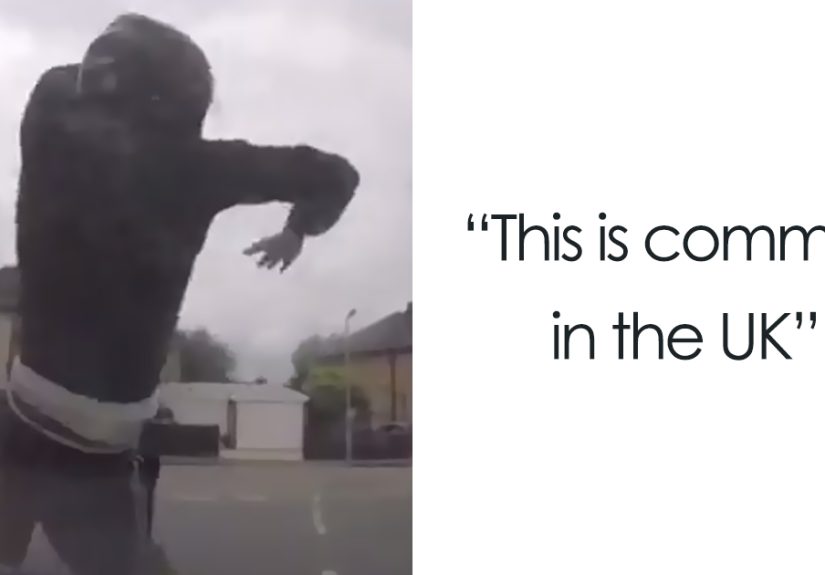
It starts like a bad magic trick: a stranger appears out of nowhere, launches themselves into your lane, and suddenly you’re cast as the villain in a drama you did not audition for. They clutch their side. They wave their arms. They look around for an audience like they’re waiting for the “Applause” sign to light up. And thenplot twistyou have a dashcam.
Staged accidents and “crash-for-cash” scams aren’t new, but they’ve evolved. Today’s schemes can involve cars that brake-check you on purpose, passengers who suddenly “remember” their neck pain, and yesoccasionally a “bad actor pedestrian” who tries the old jump-in-front routine and hopes panic does the rest. The biggest mistake scammers keep making? Assuming there’s no video, no witnesses, and no paper trail. In 2026, that’s like assuming a casino has no cameras. Cute. Also wrong.
What This Scam Really Is (And Why It’s So Dangerous)
A staged accident is insurance fraud wrapped in a traffic incident: someone engineers (or pretends) a collision so an innocent driver looks at fault. The end goal is moneythrough inflated repair bills, exaggerated injuries, bogus medical treatment, or a settlement that’s cheaper for an insurer than a long dispute. It’s not “harmless,” even when the crash is low-speed. Real injuries happen. Real drivers get traumatized. And everyone pays more when fraud gets priced into premiums.
The pedestrian version is especially nerve-wracking because it’s built on pure adrenaline. Your brain screams, “Don’t hit them!” while your heart screams, “What is happening?” and your wallet quietly files for emotional damages. A scammer counts on confusion, guilt, and your desire to make it all go away.
Why Someone Would Leap in Front of a Car
If you’ve ever wondered why a person would try something so reckless, the answer is: leverage. A “pedestrian hit” allegation can trigger immediate fearpolice, lawsuits, insurance nightmaresso scammers try to force a quick payoff. Sometimes they demand cash. Sometimes they push you to “settle privately.” Sometimes they insist you’re at fault and pressure you to hand over personal documents.
In more organized fraud rings, the scam is less about the moment and more about the paperwork afterward: claim forms, medical visits, and “witnesses” who appear suspiciously on cue. The collision (or alleged collision) is just the opening scene.
The Playbook: Common Staged Accident Setups You Should Know
1) The “Bad Actor Pedestrian” Jump
This is the headline-grabber: someone darts into your path, performs a theatrical stumble, then claims you hit them. Variations include bumping your vehicle with their body, “falling” near your bumper, or making contact with an object (like a bag or bike) and calling it an impact. The scam relies on your panicespecially if you’re alone, it’s dark, or the scammer is loud and aggressive.
2) “Swoop and Squat” (The Classic)
Two vehicles work together. One cuts in front of another and slams brakes (“squat”), while the second vehicle (“swoop”) sets it up and then disappears. You rear-end the “squat” car, and suddenly you’re dealing with multiple passengers who all feel mysteriously injured at the exact same time.
3) The “Panic Stop” / Brake-Check Special
A car gets in front of you and stops abruptlysometimes for no reason, sometimes after waving you forward, sometimes right after a lane change. In traffic, it’s easy to look like you caused it, especially if you’re tailgating or distracted for even half a second. Scammers love moments where you’re “supposed” to be at fault.
4) “Drive Down” (The Parking Lot Setup)
You’re backing out. Someone waves you on like they’re being nice. Then they accelerate and hit you, claiming you backed into them. It’s the automotive equivalent of saying “Go ahead!” and then moving the chair as you sit.
5) “Wave Down” and “Shady Helpers”
In wave-down schemes, a scammer signals you to pull over or claims your car is damaged, hoping to isolate you or create a fake incident. “Helpers” may appear fastoffering to manage the situation, recommending a specific tow truck, body shop, clinic, or lawyer. If it feels like a suspiciously well-choreographed pit crew, treat it like one.
6) “Jump-Ins” (When Extra Victims Magically Appear)
In some fraud schemes, people who weren’t actually in the vehicle at the time of the incident later claim they were passengers and are now injured. It’s not always dramatic at the scene. Sometimes it’s a paperwork stunt that shows up days later as “additional claimants.” If that sounds like nonsense, goodyou have functioning logic.
The Biggest Mistake Scammers Make in 2026
Scammers still act like it’s 1996when the only “camera” was a disposable one you never developed. But modern roads are full of receipts:
- Dashcams (front and rear) capture the setup, not just the impact.
- Phones record audio, video, time, and location data.
- Home and business security cameras often cover intersections, parking lots, and sidewalks.
- Traffic cameras and city systems may catch key moments, depending on location.
- Vehicle data (telematics, event data recorders) can support speed and braking patterns.
In multiple real cases, scam attempts unraveled the moment video contradicted the storyshowing deliberate backing, sudden lane cutting, or suspicious post-crash behavior. And when a scheme depends on you being too frazzled to think clearly, clear footage is basically kryptonite.
What To Do If Someone Jumps In Front of Your Car
This is where you win by staying boring, calm, and documented. Your goal is safety first, evidence second, conversation last.
Step 1: Prioritize Safety (Yours and Everyone Else’s)
- Slow down, don’t swerve into other lanes or oncoming traffic.
- If you can, pull over to a safe spot with good visibility.
- Turn on hazard lights.
- If you feel threatened, stay in your locked car until help arrives.
Step 2: Call 911 (Or Local Emergency/Non-Emergency as Appropriate)
If there’s any claim of injury, call emergency services. A police report can matter later, especially if the other party tries to rewrite history. Scammers often prefer you don’t involve policetreat that as a flashing neon sign.
Step 3: Do Not Pay Cash and Do Not “Settle It Right Here”
Legitimate incidents go through proper channels. Cash on the curb is how you buy yourself a second scam, plus a third scam as a bonus. If they demand money, keep repeating a single sentence: “We can exchange information and wait for police.”
Step 4: Document Everything Like You’re Narrating a True-Crime Podcast
- Record video of the scene (wide shots and close-ups).
- Photograph faces, clothing, and any visible injuries (or lack of them).
- Capture license plates, vehicle positions, and nearby signage.
- Get names and contact info for witnesses (brief and polite).
- Note the time, exact location, weather, and traffic conditions.
Step 5: Exchange Only Essential Information
Provide standard details (license, insurance, registration) as required by law in your state, but avoid handing over extra personal documents or letting anyone photograph sensitive information beyond what’s necessary. Never give your Social Security number, and don’t let a stranger “hold” your ID “just to check something.”
Step 6: Say Less About Fault
Don’t argue. Don’t apologize in a way that sounds like an admission. Don’t try to “explain” your innocence in a monologue. Just describe facts to police and your insurer. Your dashcam is the narrator now.
How To Protect Yourself Before You Ever Need This Advice
Get a Dashcam (Ideally Front + Rear)
A basic dashcam is one of the cheapest pieces of “peace of mind” you can buy. Dual-channel (front and rear) helps in staged collision setups where a second vehicle is part of the choreography. Make sure it records date/time accurately and saves clips on impact.
Drive With Space and Predictability
Most staged crash setups require you to be boxed in, rushed, or too close to stop. Keeping a safe following distance and avoiding lane-hogging clusters makes you a harder target.
Be Wary of Overly Helpful Strangers
The “helpful” person who appears instantly and insists you use their tow truck, clinic, or body shop might be the scam’s supporting cast. Use your insurer’s recommended process or a shop you choose.
Know How to Report Fraud
If something feels staged, report it to your insurer and consider reporting it to your state’s insurance fraud unit or a national fraud reporting organization. Fraud investigators look for patternsyour report can connect dots you can’t see.
If You’re Targeted: What Happens Next (And How to Keep Your Head)
If the other party files a claim against you, your insurer will investigate. This is where details matter: dashcam footage, photos, witness info, and a police report can shift the outcome from “he said / she said” to “the video says otherwise.” Be responsive, provide your evidence quickly, and keep your story consistent and factual.
If you receive aggressive calls, legal threats, or pressure to “handle it privately,” stop engaging directly. Route communication through your insurer and, if necessary, an attorney licensed in your state. Also watch for identity-theft-adjacent tactics (requests for copies of documents, strange follow-up messages, or attempts to get your personal data).
Final Thought: The Road Is Stressful EnoughDon’t Let a Scam Make It Worse
A scammer jumping in front of a car is gambling with physics, law enforcement, and your nervous systemthree things that don’t negotiate well. Your best defense is calm procedure: safety, police, documentation, and zero curbside cash. It’s not as dramatic as their performance, but it’s way more effective.
Extra: Real-World Experiences and Lessons Drivers Share (About )
Ask enough drivers, and you’ll hear the same theme: the scariest part isn’t the contact (or near-contact)it’s the instant uncertainty. People describe that split second where time slows down and your brain starts running worst-case scenarios like a movie trailer: “Am I going to jail? Did I hurt someone? Is this my fault? What if they’re actually injured?” That mental spiral is exactly what scammers try to trigger, because panic makes people compliant.
One common experience drivers report is the “too-fast crowd.” The moment something happens, the other party suddenly has multiple friends nearby. They talk over each other, point at your car, and keep repeating the same accusation. The practical lesson: don’t match their volume. Step back (physically and emotionally), keep your doors locked if you feel unsafe, and call police. Several drivers say the tone changed the instant they calmly announced, “I’m calling 911,” because organized scammers typically prefer situations without official documentation.
Another pattern: the push for a quick cash payment. Drivers say they were offered a “deal” that sounded almost tempting in the moment “Just give me $200 and we forget it.” But that’s a trap. People who paid often regretted it because the demands didn’t stop, or the scammer came back with a bigger claim later (“My injury got worse,” “My phone broke,” “I need more for my doctor visit”). The drivers who avoided getting milked had one thing in common: they refused to negotiate and stuck to process. Exchange basic information, wait for police, report to insurance. Boring wins.
Dashcam owners tend to describe a different emotional arc: fear first, relief second. Even when footage doesn’t capture every angle, it often records the lead-upsomeone stepping into the lane without looking, a suspicious pause, or a “performance” that doesn’t match the vehicle’s speed. Many drivers say the single best line they used was simple: “We can sort this out with the police and insurance.” No arguing, no accusations, no threatsjust a calm reroute to the systems scammers hate.
Finally, drivers who’ve gone through it often mention the aftershock: you may feel shaky for hours or even days. It’s normal. A staged incident is still a high-adrenaline event, and your body reacts as if it survived a real crash. Experienced folks recommend doing a quick personal debrief once you’re safe: write down what happened, save and back up footage, and make a short timeline while it’s fresh. It’s not just for insuranceit helps your brain stop replaying the “what if” loop. The scammer wanted chaos. Your best revenge is clarity.