Table of Contents >> Show >> Hide
Some jobs do not retire quietly. They vanish with a clang, a click, a puff of coal dust, or the sad little whirr of a machine that just made a human role unnecessary. One day a person is earning an honest living waking neighbors with a stick, resetting bowling pins, hauling blocks of ice, or connecting calls by hand. The next day, technology strolls in like it owns the place and says, “Thanks, I’ll take it from here.”
That is the strange magic of labor history. Work does not simply change; it shape-shifts. Entire occupations that once felt essential can disappear so completely that modern readers hear their names and assume they belong in a fantasy novel. Yet these were real jobs, performed by real people, often under hard conditions, and they helped build everyday life as we know it.
This article looks at 31 jobs that were lost to history or pushed to the edge of extinction. Some vanished because of automation. Others faded when electricity, refrigeration, telephones, computers, and mass transportation changed the rules of ordinary life. A few disappeared because society, thankfully, became less willing to tolerate dangerous, dirty, or deeply inefficient labor. Together, they tell a bigger story about work, progress, and the weirdly fragile thing we call a “normal job.”
Why Jobs Disappear in the First Place
Most obsolete jobs do not vanish because people suddenly decide they are silly. They disappear because a system changes. Cities get electrified. Offices go digital. Deliveries move from horse carts to trucks, then from trucks to apps. Communication speeds up. Consumers develop new habits. Employers find cheaper tools. Governments pass new labor laws. Entire industries reorganize around convenience, scale, and speed.
That is why lost jobs are so fascinating for SEO readers and history lovers alike: they reveal what people once depended on every single day. If a job existed, it solved a problem. If it disappeared, something else solved that problem better, faster, cheaper, or with fewer sore backs. The jobs below are more than curiosities. They are clues to how people used to live.
31 Jobs That Were Lost to History
Communication and Information Jobs
- Town Crier Before newspapers, radio, and social media turned everyone into an amateur broadcaster, a town crier delivered public announcements out loud. Laws, market news, warnings, and official notices traveled by human lungs. It was basically push notifications with a hat.
- Pony Express Rider The Pony Express became legendary because it moved mail quickly across long distances, but it lasted only a short time. The telegraph made it clear that even the toughest horse-and-rider system could not outrun a wire.
- Telegraph Operator Once upon a time, sending fast long-distance messages required Morse code skills and serious concentration. Telegraph operators were communication pros of their era, but the telephone, radio, and later digital messaging gradually pushed the role aside.
- Telegraph Messenger Somebody still had to carry telegrams to homes and businesses, which created a whole class of messenger jobs. As telegraph traffic declined and faster communication took over, the messenger with a folded envelope became a fading image of modernity’s early years.
- Telephone Switchboard Operator Early phone calls often depended on human beings physically connecting lines at switchboards. Operators were essential, highly visible workers, especially women, until automated dialing and electronic exchanges made manual connection less necessary.
- Human Computer Before electronic computers took over, “computer” could mean a person paid to do calculations by hand. These workers helped with engineering, astronomy, telecommunications, and aerospace research. Then actual computers arrived and politely stole the title.
- Typing Pool Typist Large offices once had rooms full of typists producing letters, reports, and forms. Word processors, personal computers, and email gradually broke up the typing pool and redistributed the work across the office.
- Stenographer Pool Clerk Stenographers used shorthand to capture speech quickly in offices, law firms, and government settings. Some specialized roles remain, but the broad office-based stenography workforce shrank dramatically once dictation machines, recordings, and digital tools became common.
- Keypunch Operator For decades, businesses fed data into computers using punch cards, and keypunch operators created those cards with precision. Once direct keyboard entry and modern software became standard, the job went the way of floppy disks and office ashtrays.
- Mimeograph Operator Before laser printers and instant PDFs, copying documents could be a sweaty, ink-smudged ritual. Mimeograph operators handled duplication for schools, churches, and offices. The smell may live forever in memory, but the job mostly does not.
- Linotype Operator Newspapers and printers once relied on linotype machines that cast entire lines of metal type. It was skilled, specialized work, but desktop publishing and digital typesetting changed printing so thoroughly that linotype operators became a relic of hot-metal production.
- Hand Compositor Before mechanized typesetting, compositors arranged individual letters by hand to create pages. It demanded speed, accuracy, and an almost supernatural tolerance for tiny metal pieces. Machines first reduced the trade; software finished the job.
Street, Travel, and City-Service Jobs
- Lamplighter In the era of oil and gas streetlamps, someone had to light them, maintain them, and return later to extinguish them. Electric street lighting turned this nightly ritual into one very long unemployment notice.
- Knocker-Up Alarm clocks were not always cheap or reliable, so some workers earned money by waking clients with knocks on doors or windows. It was a job built on punctual annoyance, and mechanical clocks eventually did the pestering for free.
- Elevator Operator Riding an elevator once involved a uniformed worker controlling speed, leveling, and stops. Automated systems made the role unnecessary in most buildings, although a few old-fashioned attendants still survive in nostalgic pockets.
- Toll Collector Toll booths long depended on human workers taking cash and making change with saint-like patience. Electronic tolling and plate-based billing turned millions of small transactions into a job-killing triumph of convenience.
- Streetcar Conductor Conductors collected fares, managed passengers, and kept streetcars moving through busy cities. As transit systems modernized, ticketing changed, and many lines vanished or automated, the role shrank dramatically.
- Train Fireman Steam locomotives needed someone to shovel fuel and maintain the fire powering the engine. Once diesel and electric systems took over, the classic fireman’s labor mostly disappeared from mainstream railroading.
- Stagecoach Driver Before rail expansion and automobiles dominated travel, stagecoach drivers moved people, parcels, and news over rough roads. Their work symbolized motion and endurance, but modern transport left the trade mostly to reenactments and tourist towns.
- Pay Phone Coin Collector Public pay phones once swallowed quarters by the mountain, and somebody had to collect them. Cell phones did not just disrupt a business model; they erased an entire maintenance-and-collection ecosystem.
Delivery and Household Supply Jobs
- Ice Cutter Before electric refrigeration, workers cut ice from frozen lakes and rivers, stored it, and shipped it for warm-weather use. It was cold, dangerous, physical work, and the refrigerator eventually told nature-based ice harvesting to take a seat.
- Iceman Once the ice was harvested, someone had to deliver heavy blocks to homes and businesses. The iceman was a familiar neighborhood figure until affordable electric refrigerators transformed food storage and made regular ice delivery largely unnecessary.
- Milkman Home milk delivery used to be part of everyday domestic life. Glass bottles on porches were once as normal as Wi-Fi routers are now. Supermarkets, refrigeration, and changed shopping habits gradually pushed the classic milk route into decline.
- Soda Jerk At old-fashioned drugstore fountains, soda jerks mixed fizzy drinks, sundaes, and milkshakes with flair. Fast food chains, bottled beverages, and changes in retail culture turned the role from common employment into retro Americana.
Factory, Entertainment, and Analog-Era Jobs
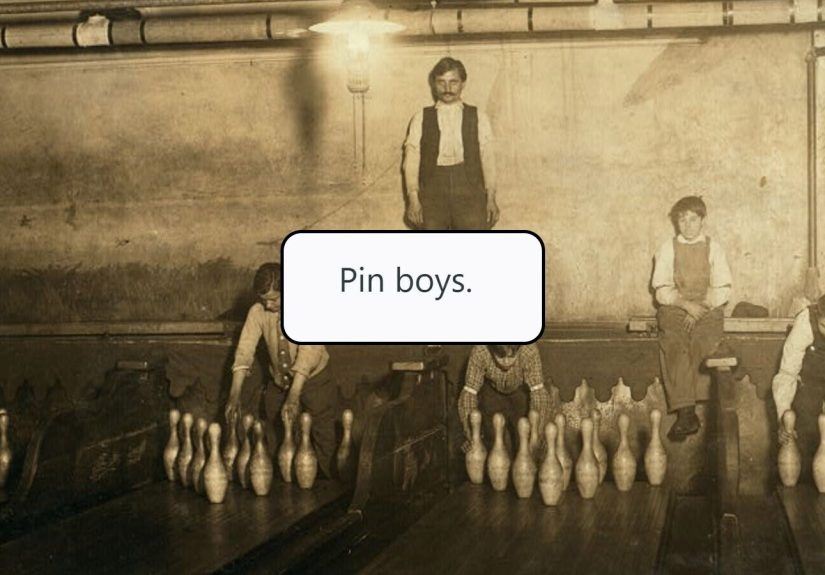
- Bowling Pinsetter Before automatic machinery reset bowling lanes, kids and young workers often performed the job by hand. It was fast, repetitive, and not exactly ideal for fingers. Mechanical pinsetters made the work disappear and bowling a lot less chaotic.
- Video Store Clerk For one shining era, recommending a Friday-night movie from a wall of VHS tapes or DVDs was a real career path. Then streaming arrived, and late fees lost their ability to terrorize the public.
- Darkroom Photo Developer Film photography once depended on skilled workers developing negatives and making prints. Digital cameras and smartphone photography did not eliminate every darkroom, but they pushed the everyday commercial version of the job to the margins.
- Projection Reel Changer Traditional movie projection relied on film reels, timing, and manual handling. As cinemas switched to digital projection, the specialized labor of physically managing reels declined sharply.
Dirty, Dangerous, and Thank-Goodness-Largely-Gone Jobs
- Rat Catcher Cities once relied heavily on people who trapped or killed rats for public health and sanitation. Pest control still exists, but the old-style specialist rat catcher as a common urban role belongs more to history than to modern classifieds.
- Leech Collector Medicinal leeches were once valuable enough to support the people who gathered them from wetlands and ponds. It was unpleasant, bloody, and deeply committed to making skin everyone’s problem.
- Bobbin Boy Textile mills employed children to replace bobbins and help keep machines moving. The job is a powerful reminder that not every lost occupation deserves nostalgia. Labor reform matters.
- Chimney Sweep Chimney sweeping still exists in limited form, but the old world of child sweeps climbing narrow soot-filled flues stands as one of history’s grimmer examples of dangerous work normalized by necessity.
What These Lost Jobs Really Tell Us
The history of obsolete occupations is not just a list of quirky trivia. It shows how work follows the shape of daily life. When people lived by gaslight, lamplighters mattered. When food spoiled quickly, icemen mattered. When messages traveled by wire instead of Wi-Fi, telegraph operators mattered. When offices ran on paper, carbon copies, and clattering keys, typists, stenographers, and linotype operators mattered.
There is also a humbling lesson here. The jobs that feel permanent today may look just as strange to future readers. Entire modern categories of work may shrink, split, or vanish as artificial intelligence, robotics, automation, and new consumer habits keep rearranging the economy. Labor history does not laugh at workers of the past. It warns workers of the present.
Still, there is something strangely comforting about these vanished roles. They remind us that human beings have always adapted. People do not just lose jobs; they invent new ones, often around the very technologies that disrupted them. History is full of endings, yes, but also full of career plot twists.
Experiences That Bring Lost Jobs Back to Life
One of the most memorable ways to understand obsolete jobs is not by reading a definition, but by stepping into a place where the old systems still leave fingerprints behind. Walk through a historic downtown at dusk and look at old streetlamps, and suddenly the lamplighter stops sounding imaginary. Visit a preserved train station and the role of the telegraph operator becomes easier to picture. Stand in an old print shop and hear someone explain linotype, and you realize modern publishing did not just become easier; it became almost absurdly faster.
Museums, restored theaters, railroad sites, and living-history villages have a way of turning “lost jobs” into lived experience. A manual switchboard with cords and plugs looks almost playful until you imagine rows of operators handling call after call with no touchscreens, no search bars, and no mercy from impatient customers. An icebox in a historic kitchen looks charming for about six seconds, and then you remember that an iceman had to haul giant frozen blocks through neighborhoods so leftovers could survive another day. Suddenly, the refrigerator in your kitchen starts feeling less ordinary and more like an overachiever.
There is also an emotional side to this topic. Many people still have family stories tied to disappearing work. A grandparent may have been a milkman, a railroad worker, a switchboard operator, or a typist in a giant office pool. Those stories often carry pride, exhaustion, humor, and a little disbelief. The details matter: the early hours, the uniforms, the tools, the sounds of the machinery, the way a whole neighborhood recognized the person doing the route. Jobs shaped identity as much as income.
Even pop culture can trigger that experience. Old movies, black-and-white photos, and period dramas often show occupations modern audiences barely notice: elevator operators announcing floors, soda jerks sliding glasses across counters, conductors punching tickets, projectionists threading film. At first glance, those details feel decorative. But when you pay attention, they reveal how much invisible labor once sat behind everyday convenience.
Perhaps the most powerful experience of all is recognizing how quickly “normal” can disappear. A video store clerk did not vanish in ancient Rome; that job disappeared within living memory. Pay phone coin collectors, darkroom developers, and keypunch operators are not medieval curiosities. They belong to the recent past, which makes the whole subject feel less like dusty history and more like a preview. It nudges readers to ask a slightly uncomfortable question: which current jobs are quietly heading toward the museum label?
That is why the subject resonates. Lost jobs are about nostalgia, yes, but they are also about resilience. They show what people were capable of before convenience became automatic. They remind us that technology always has a human “before” story. And they make the present look a little less permanent, which is not necessarily bad. It is simply honest. Work changes. Tools change. People adapt. The job title fades, but the human skill behind it often survives in a new form, wearing a different uniform and answering to a different name.