Table of Contents >> Show >> Hide
- Why “Just Take It Out” Isn’t Always the Best Plan
- Before You Start: A 60-Second Checklist
- Step-by-Step: How to Empty a Trash Bin Without a Mess
- How to Empty Different Types of Trash Bins
- Trash Bag Leaks, Odors, and Other Annoying Problems (Solved)
- How to Clean and Disinfect a Trash Bin
- What Not to Put in the Trash Bin (For Safety and Common Sense)
- Make Trash Day Easier: Small Habits That Work
- Experience Notes (500+ Words): Real-Life Trash Bin Moments and What They Teach You
Emptying a trash bin sounds like the most “no thoughts, just vibes” household chore. Until the bag rips, mystery juice
hits your sock, and suddenly you’re doing interpretive dance with a banana peel stuck to the bottom.
This guide walks you through how to empty any trash bin (kitchen, bathroom, office, outdoor cart) neatly, safely, and
without turning your home into a landfill-themed escape room. You’ll also learn how to reduce odors, prevent leaks,
clean the bin the right way, and avoid tossing items that can cause injuries or even fires in the trash stream.
Why “Just Take It Out” Isn’t Always the Best Plan
A trash bin isn’t just a containerit’s a tiny ecosystem of moisture, food residue, packaging, germs, and occasionally
that one rubber band that has survived three weeks and is now the alpha predator.
- Hygiene: You’re handling surfaces and materials that can spread germsespecially in kitchens and bathrooms.
- Safety: Overfilled bags and awkward lifting can strain your back or cause cuts if sharp items poke through.
- Odors & pests: Smell happens when trash sits too long, gets wet, or includes strong food scraps.
- Collection rules: Many cities require lids to close and set weight limits for bags/cartsoverstuffing can mean no pickup.
Before You Start: A 60-Second Checklist
Grab these basics
- New trash bag/liner (correct size for your bin)
- Optional gloves (helpful if you’re cleaning up leaks or changing a bathroom bin)
- Paper towel or disinfecting wipe for the rim/lid
- If the bag is heavy: a second bag for “split the load” mode
Quick reality check
- Is the bag too heavy? If yes, don’t “power through.” Split it. Your back is not a forklift.
- Is there liquid? If yes, plan to carry it upright and consider double-bagging.
- Any sharp stuff? If you see glass, skewers, needles, or broken plastic, don’t squeeze the bag to “make room.”
Step-by-Step: How to Empty a Trash Bin Without a Mess
Step 1: Open the bin and check the “danger zones”
Open the lid and scan for obvious problems: overflowing trash, sharp edges, liquids pooling at the bottom, or a liner
that’s slipped down and is now hugging the can like it pays rent.
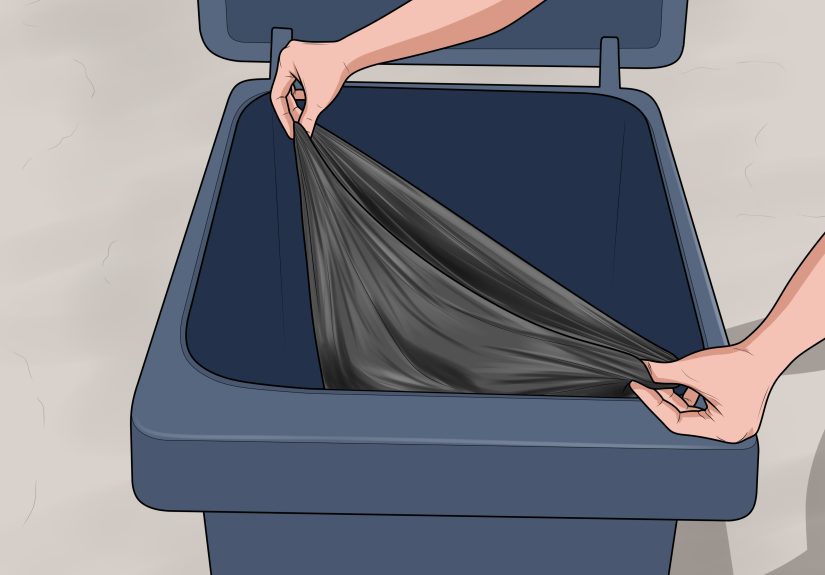
Step 2: Break the “suction seal” (aka the stuck-bag fix)
If your liner is stuck, don’t yank straight up immediately. That’s how you get the dramatic “rip” followed by the
tragic “why is it wet?”
- Gently pull one side of the bag away from the bin wall to let air in.
- If needed, tilt the bin slightly and use your free hand to loosen the liner along the inside edge.
- For stubborn suction, push up from the bottom of the bag (through the outside of the can) while lifting.
Step 3: Gather the top of the bag and compress carefully
Gather the bag edges at the top. If the bag is tall, twist the neck slightly to keep everything contained. If you need
to compress the trash to tie the bag, press down gentlyavoid sharp corners and never hug the bag to your body.
Step 4: Tie it right (tight enough, not a nautical knot)
Tie the bag securely using its drawstrings or by knotting the neck. The goal is a closed seal that won’t “burp” odors
or spill if the bag shifts.
- If the bag is very full, consider tying it and then placing it into a second bag (double-bagging) for stability.
- If it’s heavy, split into two bags before you tiebetter two manageable trips than one heroic mistake.
Step 5: Lift smart and carry upright
Lift with your legs, keep the bag close to your body (without letting it rub against you), and avoid twisting while
carrying. If it’s awkward or heavy, get help or reduce the load. “I’ve got this” is not a safety strategy.
Step 6: Reset the bin with a fresh liner
Before the new bag goes in, take 10 seconds to wipe the rim and underside of the lidthose are the spots that collect
sticky residue and odor over time.
- Fit the new liner fully into the bin and fold the edge over the rim so it doesn’t slide.
- Optional pro move: store a few extra liners at the bottom of the can for fast changes later (just keep them dry).
How to Empty Different Types of Trash Bins
Kitchen trash can
- Empty before it’s overflowingfood scraps are odor champions.
- Wrap messy items (raw meat packaging, greasy paper, wet leftovers) to reduce leaks.
- If odors build up fast, consider a smaller bag and more frequent changes.
Bathroom bin
- Use smaller liners and empty regularlybathrooms are warm/humid, which makes smells clingy.
- If the bin holds personal-care waste, wipe the lid and rim weekly.
Office/desk bin
- Lightweight paper waste is easyuntil someone tosses coffee grounds or half a yogurt in there.
- If food waste is involved, empty daily and wipe the bin to avoid attracting pests.
Outdoor rolling cart
- Keep the lid fully closed to reduce pests and prevent debris from blowing out.
- Don’t overfillmany communities won’t collect carts if the lid can’t close.
- Watch weight: some services set limits for bags and extra items (commonly in the 40–60 lb range), so avoid turning one bag into a gym workout.
Trash Bag Leaks, Odors, and Other Annoying Problems (Solved)
Problem: “The bag ripped. I saw my life flash before my eyes.”
- Immediate fix: Place the torn bag into a second bag (double-bag) before moving it.
- Prevent next time: Don’t overfill, and avoid tossing sharp edges directly into the trash.
- Bonus: Use thicker liners for kitchen bins if you frequently toss heavy or wet waste.
Problem: “The bin smells even after I take the trash out.”
- Odor usually means residue on the bin walls, lid, or bottomcleaning beats air freshener.
- Sprinkle a little baking soda at the bottom (under the liner) to absorb odors between deep cleans.
- Keep wet food waste sealed (or freeze it until trash day if smell is a constant battle).
Problem: “Maggots/flies showed up. I did not invite them.”
- Empty more frequently and keep the lid closed.
- Rinse sticky spills promptlyespecially in warm months.
- Deep clean and fully dry the bin; moisture is the VIP pass for pests.
Problem: “The liner keeps sliding down.”
- Use the correct liner sizetoo small is the #1 cause of “bag collapse.”
- Fold the liner edge over the rim and press it into place before filling.
- If your bin has a liner ring or clips, use themthis is literally their moment.
How to Clean and Disinfect a Trash Bin
You don’t need to deep-clean your trash can daily (unless your household is training for the Trash Olympics). But
regular cleaning prevents odor buildup and keeps germs and grime from turning your bin into a science project.
How often should you clean?
- Kitchen bin: Wipe the rim/lid weekly; deep clean every month or as needed.
- Bathroom bin: Deep clean every 1–3 months or sooner if spills happen.
- Outdoor cart: Seasonal cleaning is a good baseline; more often in hot weather or after leaks.
Deep-clean method (simple and effective)
- Empty completely. Remove the liner and any debris stuck to the bottom.
- Rinse. Use a hose outside or rinse in a tub/shower for indoor bins.
- Wash. Scrub with warm water and dish soap (a long-handled brush helps for big bins).
- Optional disinfect. Use an appropriate disinfectant and follow label instructions. If using bleach, never mix it with other cleaners and ventilate the area.
- Rinse again (if needed). Some products require rinsing, especially for surfaces that might contact hands or food packaging.
- Dry fully. Air-dry with the lid open. A dry bin helps prevent odor, mold, and that “why is it damp again?” situation.
What Not to Put in the Trash Bin (For Safety and Common Sense)
A big part of “emptying the trash safely” is what goes into the bag in the first place. Improper disposal can injure
sanitation workers, damage equipment, or create fire risks during transport.
Items that need special disposal
- Lithium-ion batteries & devices: Don’t toss in household trash or regular binsuse approved recycling/drop-off options.
- Household hazardous waste: Paints, pesticides, certain cleaners, oils, and similar products often require special disposal.
- Medicines: Prefer take-back programs or authorized collection options; follow official guidance if disposing at home.
- Needles/sharps: Use a proper sharps container (or a strong puncture-resistant alternative per local guidance) and follow your community’s disposal rules.
- Loose broken glass or sharp metal: Wrap carefully and use a rigid container so it can’t puncture a trash bag.
How to handle “sharp” waste the safer way
- Wrap broken glass, skewers, or sharp plastic so edges can’t pierce the liner.
- Place small sharps in a hard-sided container before bagging.
- Never “compress” a bag with your hands if you suspect sharp items are inside.
Make Trash Day Easier: Small Habits That Work
- Empty at 75% full. Bags are easier to tie, lighter to lift, and less likely to rip.
- Separate wet waste. Wrap drippy items, and keep liquids out of the bin whenever possible.
- Keep a wipe nearby. A quick rim/lid wipe prevents slow-burn stink accumulation.
- Wash your hands after handling garbage. Quick, easy, and wildly underrated.
- Know your local rules. Lid closed, weight limits, and set-out times varyfollowing them prevents missed pickup.
Experience Notes (500+ Words): Real-Life Trash Bin Moments and What They Teach You
If you’ve ever emptied a trash bin and thought, “Why is this chore so dramatic?” you’re not alone. In real homes,
emptying the trash is rarely a neat, silent transfer of a perfectly tied bag. It’s more like a weekly pop quiz
where the questions are: “How strong is this liner, really?” and “What is that smell trying to communicate?”
One of the most common experiences people report is the overconfidence lift: the bag looks fine, you grab it,
you liftthen you realize it weighs about as much as a medium-sized refrigerator. The lesson is always the same:
the best time to avoid a heavy bag is before it becomes heavy. Emptying at three-quarters full feels
slightly premature, but it’s the difference between a simple trip and a full-body negotiation with gravity.
Then there’s the mystery leak. You didn’t put liquid in the bin, and yet… the bottom is wet. In many kitchens,
the culprit is “wet-by-association” wasteproduce wrappers with condensation, takeout containers that weren’t fully
drained, or food scraps that sat long enough to release moisture. People who solve this fastest usually adopt one
of two habits: they wrap messy food waste before tossing it, or they keep a small “drippy scraps” container (even a
repurposed bag in the freezer) until trash day. It sounds extrauntil you realize it saves you from cleaning the bin
at 10 p.m. on a Tuesday.
Odor is another shared storyline. Many folks try to “air freshener” their way out of a stink problem, but the experience
tends to be the same: now it smells like lavender garbage. The people who win the odor battle usually do two things:
they wipe the lid and rim regularly (because that’s where residue hides), and they deep-clean the bin often enough that
smells don’t get a long-term lease. A sprinkle of baking soda under the liner is a surprisingly popular trick, not because
it’s magical, but because it helps absorb odors between cleanings.
A surprisingly memorable moment for many households is the bag suction trap: you pull up and the liner refuses to move,
like it’s been welded to the plastic. The quick fixbreaking the seal by pulling the bag edge away to let air infeels like
learning a secret handshake. After that, people often switch to the right bag size (or stop cramming the bag down so tightly),
and the problem usually disappears.
Finally, there’s the “trash empathy” realization. When people learn that sharp objects, hazardous leftovers, or loose batteries
can injure sanitation workers or create safety risks during collection, they tend to change how they bag and sort waste. The
experience becomes less “get it out of my house” and more “let’s not turn trash day into someone else’s emergency.”
What These Stories Have in Common (Conclusion + SEO Tags)
The best way to empty a trash bin is the method that prevents the three big problems: spills,
smells, and strain. Empty before the bag becomes a monster, tie it securely, lift smart,
reset the bin cleanly, and keep “special disposal” items out of regular trash. Your future self (and your nose) will thank you.