Table of Contents >> Show >> Hide
- Why This Little Press Matters
- How the Tool Actually Works
- Why 3D Printed Plastic Is Not a Ridiculous Choice
- Where 3D Printed Compound Tooling Really Shines
- Engineering Realities You Cannot Ignore
- The Economics Are Hard to Ignore
- What This Means for Makers and Small Manufacturers
- Experiences From the Bench: What It Feels Like to Use a 3D Printed Compound Press
- Final Thoughts
If you spend enough time around makers, fabricators, and people who own suspiciously large boxes of springs, you learn one universal truth: the prototype is usually charming, and the production process is usually a gremlin. Something that looks brilliant on a workbench can become a full-time nuisance the moment you need to make ten of them, let alone fifty. That is exactly why the idea behind a compound press that bends, punches, and cuts with 3D printed plastic tooling is so fascinating. It is not flashy in the “robot army” sense. It is flashy in the “wait, this tiny tool just saved three hours and a blister” sense.
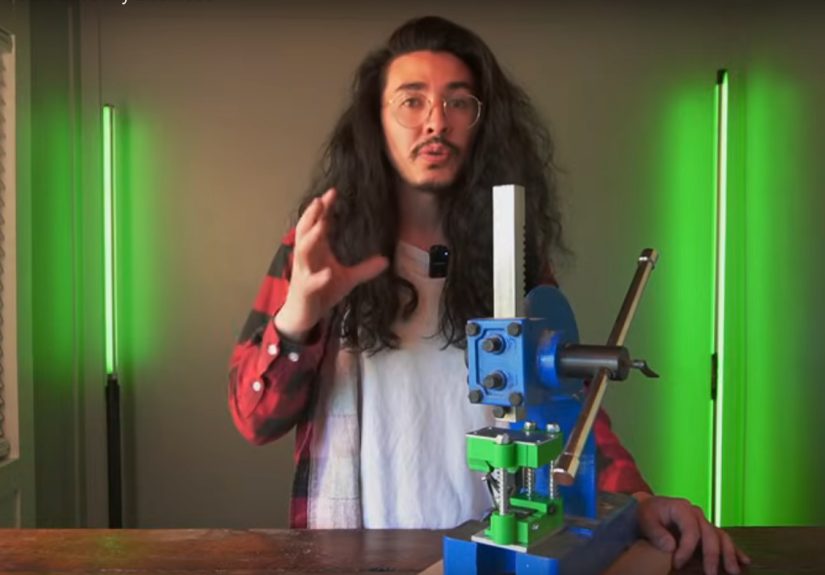
The phrase compound press may sound like it belongs in a catalog next to giant industrial stamping equipment, but the heart of the concept is surprisingly simple. Instead of performing one operation at a time, the tool combines several actions into a single press cycle. A strip of metal goes in. A shaped part comes out. In the case that inspired this article, the setup uses printed dies, a hand-operated arbor press, a cutting mechanism, and a punch to turn awkward hand fabrication into a repeatable workflow. It is a smart example of 3D printed tooling meeting sheet metal fabrication in the most practical way possible.
And that is the big story here. This is not just a tale about plastic parts surviving brief contact with metal. It is about how rapid tooling, low-volume manufacturing, and clever die design can shrink the distance between “nice prototype” and “real product.” For small shops, independent designers, and even in-house manufacturing teams, that is a very big deal.
Why This Little Press Matters
The beauty of the featured tool is that it solves a very ordinary manufacturing headache. Many products need small formed metal parts: clips, brackets, tabs, spring contacts, retainers, and little mystery components that never get the glory but somehow hold the whole assembly together. These parts are easy enough to make by hand once or twice. Cut the strip. Punch the hole. Bend the shape. Adjust it because the bend landed slightly off. Repeat. Mutter. Repeat again.
That approach works for prototypes, but it collapses under repetition. Human hands are versatile, but they are not especially fond of doing the same fiddly operation fifty times in a row. By bringing cutting, punching, and bending into a single setup, a compound-style press turns that repetitive misery into something close to a production process. The operator stops acting like a one-person marching band and starts acting like a manufacturer.
That shift is more important than it sounds. A workflow that reduces several minutes of manual work to a few seconds per part changes costs, consistency, and confidence. It also improves geometry. When a part is formed inside a well-designed die, the resulting shape is typically more repeatable than something bent by feel with pliers and optimism.
How the Tool Actually Works
At a high level, the press follows a classic manufacturing principle: constrain the material, control the path, and let the tooling do the thinking. The metal blank or strip is positioned inside a fixture. The printed die geometry directs where the material bends. A cutting edge or mounted cutting component trims the part to size. A punch creates the needed feature, often a hole or slot. All of that happens under the controlled force of the press.
What makes the setup especially clever is not that plastic magically replaces hardened steel in every role. It does not. The clever part is that the designer uses plastic where it is most valuable: to define shape, locate the workpiece, guide motion, and support short-run forming operations. The load path, the clearances, and the contact points are designed so the tool behaves less like a toy and more like a purpose-built aid.
That distinction matters because people often misunderstand 3D printed press tooling. Printed plastic is not supposed to swagger into a high-volume stamping plant and fire the steel dies. What it can do, however, is make small-batch forming realistic, affordable, and fast. In other words, it is not trying to be a factory hero. It is trying to be the world’s most overqualified prototype assistant, and sometimes that is exactly what production needs.
Why 3D Printed Plastic Is Not a Ridiculous Choice
At first glance, using plastic to bend or form metal sounds like bringing a spatula to a sword fight. But modern additive manufacturing has changed the math. High-performance printed polymers, especially reinforced nylons and engineering resins, can be stiff, accurate, and durable enough for tooling in the right conditions. The key phrase there is the right conditions.
For prototyping, tool validation, short-run production, and bridge-to-production work, printed tooling offers one brutal advantage over conventional machined dies: speed. A design can be adjusted in CAD in the morning, printed the same day, tested shortly after, and revised without opening a second mortgage for machine time. That loop is gold for engineers who are still tuning geometry, bend sequence, spring force, fit, or assembly behavior.
Cost is the other big reason. Traditional tooling is wonderful when the part design is mature and the production volume justifies the investment. But if a business only needs a small batch, or if the part shape is still evolving, conventional tooling can feel like ordering a grand piano to practice a single scale. Printed tooling shrinks the financial risk. It lets teams learn before they commit.
There is also a finish advantage in some cases. Plastic dies can be gentler on surfaces than metal tooling, which can reduce marking on formed parts. For visible components, decorative panels, or parts that need less post-processing, that can be a quiet but meaningful benefit.
Where 3D Printed Compound Tooling Really Shines
Prototype Parts That Keep Changing
When a product is still in motion, tooling must move with it. Maybe the bend angle changes by five degrees. Maybe the slot shifts. Maybe the spring feature needs more preload. With a printed die, those edits are annoying, but manageable. With machined steel tooling, they can be budget meetings wearing safety glasses.
Low-Volume Production
Small businesses and specialty manufacturers often live in the awkward middle ground: too many parts to keep hand-making them, not enough parts to justify expensive hard tooling. That is the sweet spot for printed compound tooling. If the press forces are reasonable and the part design is thoughtful, printed dies can transform low-volume production from “barely tolerable” to “surprisingly smooth.”
Bridge Manufacturing
Sometimes a company needs parts now, while waiting for permanent tooling later. This is where rapid manufacturing becomes practical rather than theoretical. Printed tools can cover those early runs, validate assembly behavior, expose design mistakes, and keep product development moving while the industrial-grade tooling catches up.
Engineering Realities You Cannot Ignore
This is the part where we put down the confetti cannon and talk about physics.
Material Choice Matters
Not all printed plastics are equal. Material stiffness, heat resistance, layer behavior, surface finish, and impact toughness all influence whether a tool succeeds or explodes in an extremely educational way. Reinforced nylons and engineering-grade resins are often better suited for this kind of work than hobby-grade materials chosen solely because they were already loaded in the printer. “It was on the spool” is not, sadly, a design methodology.
Geometry Is Doing Half the Work
Good tooling does not just survive force; it manages force. Load paths should keep the tool in compression where possible, support thin features, and avoid unnecessary stress risers. Even a strong printed material can fail if the die geometry invites concentrated loads or flex where it should not. In practical terms, generous support, solid seating, and thoughtful reinforcement usually beat wishful thinking.
Bend Rules Still Apply
The metal does not care that your die was printed yesterday. It still follows normal sheet metal behavior. Bend radius, flange length, feature spacing, and material thickness all matter. If holes or slots sit too close to a bend, they can distort. If bend radii are inconsistent, setup and repeatability get uglier. If the part design ignores minimum flange realities, the brake or press may not hold the work as intended.
Springback also enters the chat, uninvited as usual. Metal wants to relax after bending, which means the final geometry often depends on overbending and controlled tool design. A small press tool can absolutely improve repeatability, but it cannot repeal metallurgy. You still have to design for what the material does after the load is removed.
Wear, Friction, and Lubrication Are Real
Repeated sliding contact between metal and tooling creates friction and heat. That matters for part quality, tool life, and required press force. Lubrication can reduce wear and make forming easier, especially in operations where the material has to flow predictably across the die surface. Printed tooling is practical, but it is not immune to abrasion. If the tool will see repeated cycles, surface wear should be treated as an engineering variable, not a surprise plot twist.
Know When to Stop
Printed compound tooling is powerful, but it is not a universal replacement for steel dies. High tonnage, abrasive materials, tight production tolerances over long runs, and industrial volumes still favor traditional tooling. The smartest teams are not the ones who shout “3D print everything.” They are the ones who understand exactly where printed tools create leverage.
The Economics Are Hard to Ignore
The numbers behind this approach are what turn curiosity into action. In-house printed tooling can reduce lead time from weeks to days, or even hours, depending on the size of the tool and the printing process. That speed matters because every day spent waiting on tooling is a day that design validation, pilot production, or market launch stays frozen.
Short-run economics are especially compelling. Instead of outsourcing metal tooling for a part that may change next Tuesday, a team can print a die, test it, form sample parts, revise the geometry, and repeat. Even when the printed tool is not permanent, it can save real money by preventing expensive mistakes before hardened tooling is ordered.
There is also a hidden economic benefit: printed tools encourage experimentation. When tooling is expensive and slow, engineers become conservative. When tooling is faster and cheaper, they test better ideas. Better ideas tend to produce better parts, and better parts have a funny habit of becoming profitable.
What This Means for Makers and Small Manufacturers
The most exciting part of this story is not that giant manufacturers can use additive manufacturing. We already knew that. The exciting part is that a smaller operation can borrow serious manufacturing logic without needing a serious manufacturing budget. A modest arbor press, a competent 3D printer, good design discipline, and a healthy respect for material behavior can unlock processes that used to feel out of reach.
That is why the featured compound press resonates so strongly. It demonstrates a broader trend in modern fabrication: people are no longer choosing between “fully handmade” and “million-dollar automation.” There is a thriving middle ground where smart fixtures, printed dies, hybrid tools, and low-cost presses can deliver repeatable results.
For product developers, this opens the door to more custom hardware. For repair shops, it makes replacement parts and specialty clips more realistic. For artists and experimental builders, it means complex metal forms are no longer reserved for giant facilities with intimidating concrete floors. It is manufacturing scaled to human-sized ambition, which is a lovely thing.
Experiences From the Bench: What It Feels Like to Use a 3D Printed Compound Press
Anyone who has ever hand-made a small metal clip, spring tab, or bracket will recognize the emotional arc immediately. The first piece is fun. The second one feels efficient. By the seventh, you start negotiating with the universe. By the twelfth, every tool on the bench somehow seems to be in the wrong place, and the metal strip has developed a personal vendetta. That is why the experience of moving to a compound press built around 3D printed tooling can feel almost absurdly satisfying.
The first thing people usually notice is not speed. It is relief. You stop measuring, remeasuring, trimming, nudging, rebending, and trying to remember whether this particular tab gets bent first or second. The die remembers for you. The fixture does the alignment. The press stroke becomes the routine. Instead of juggling a dozen tiny decisions for every part, you focus on loading the material cleanly and pulling the lever with confidence.
Then the consistency starts showing up. Parts that once varied just enough to be annoying begin to look like they belong to the same family. The hole lands where it should. The cut edge repeats. The bend angle stops drifting all over the map. Assembly becomes calmer because the part coming off the bench is no longer a handcrafted suggestion. It is a repeatable component. That shift changes the whole mood of a project.
There is also a very specific pleasure in watching printed plastic do real work. Not imaginary future work. Not “someday in a case study” work. Real work, right now, on an actual press. It feels a little mischievous, honestly. You know plastic has limits, but when the die seats properly, the metal forms cleanly, and the part comes out right, it is hard not to grin. It feels like you found a shortcut that is somehow legal.
Of course, the experience is not all victory music. The learning curve has opinions. Early versions of a tool may crack, flex too much, wear faster than expected, or produce bends that need more compensation for springback. Clearances that looked fine on-screen can become trouble once real metal enters the scene. Printed tools are wonderfully fast to revise, but they still demand careful iteration. In practice, that means your first successful press may actually be version three or version five, and that is normal.
Users also tend to discover that the most valuable improvements are small ones. A slightly better registration feature. A smoother load-in. A stronger support wall. A tiny change in punch alignment. A dab of lubrication where friction was stealing force. The lived experience of this process is rarely about one giant breakthrough. It is about stacking many small refinements until the tool begins to feel inevitable, as though it should have existed all along.
Perhaps the biggest experience-related lesson is psychological: once you build one successful compound setup, you start seeing similar opportunities everywhere. That awkward spring clip? Tool it. That repeat bracket? Tool it. That strange little retainer you have been hand-making like it is still 1894? Definitely tool it. The bench changes because your mindset changes. You stop asking, “Can I keep making this by hand?” and start asking, “What would a simple repeatable process look like?” That is a much better question, and it usually leads to better products.
Final Thoughts
The idea that a compound press can bend, punch, and cut using 3D printed plastic sounds, at first, like a dare. In reality, it is a smart example of modern fabrication finding the sweet spot between manual craft and industrial process. The trick is not pretending plastic tooling is invincible. The trick is using it where speed, flexibility, and low-volume economics matter most.
That is why this approach deserves attention. It turns additive manufacturing from a prototyping sidekick into a genuine process enabler. It gives makers and manufacturers a faster route to repeatability. And it proves, once again, that some of the best manufacturing ideas are not the loudest ones. Sometimes the future shows up as a hand-operated arbor press, a cleverly printed die, and a pile of parts that finally come out right the first time.