Table of Contents >> Show >> Hide
- Before You Organize: Set the Closet Up for Success
- 1) Do a fast closet audit (a.k.a. “What even lives in here?”)
- 2) Use a simple declutter test to cut decision fatigue
- 3) Keep an always-ready donation bag or bin in the closet
- 4) Follow the “80% full” rule so your closet can breathe
- 5) Measure once, buy once
- 6) Create “zones” based on how you get dressed
- Make Hanging Space Work Harder (Without Wrinkling Everything)
- 7) Switch to slim, non-slip hangers
- 8) Set up double-hang sections for short items
- 9) Keep one “long-hang” zone for dresses and coats
- 10) Organize clothing by category first, then by color (if it helps)
- 11) Add a valet hook or pull-out rod for outfit planning
- 12) Use cascading hooks for handbags, belts, or scarves
- 13) Turn the back of the door into storage
- 14) Add lighting so you can actually see what you own
- Shelves, Drawers, and Bins: Give Every Item a “Home Address”
- 15) Use clear bins for “grab-and-go” categories
- 16) Label bins like you mean it
- 17) Add shelf dividers to stop sweater avalanches
- 18) Store sweaters folded, not hung
- 19) Use drawer organizers for small items
- 20) Create a “top-shelf archive” for truly occasional items
- 21) Use vertical file-folding for tees and leggings
- 22) Add a hamper (or two) inside the closet
- 23) Use baskets for “in-between” items
- Shoe Organization That Doesn’t End in a Pile by the Door
- Accessories: The Stuff That Multiplies When You’re Not Looking
- Closet Upgrades That Feel Custom (Even on a Budget)
- How to Keep It Organized (So This Isn’t a “One-Weekend Miracle”)
- 500+ Words of Real-Life Experiences: What Actually Works in Closets
- Conclusion
Closets are like tiny airports for your stuff: things arrive, things depart, and somehow you always end up standing there saying,
“How do I own three nearly identical black hoodies and zero matching socks?” If your closet feels more like a
stress closet than a storage closet, you don’t need a celebrity-sized walk-in or a personality transplant. You need a simple system
that fits your space, your habits, and your actual life (the one where you’re rushing out the door with one shoe on).
The secret to a closet that stays organized isn’t buying a million bins. It’s creating a layout where the “easy” choice is also the
“tidy” choice. That means smart zones, the right hanging setup, practical storage for shoes and accessories, and a maintenance routine
that takes minutesnot a full weekend and a motivational playlist.
Before You Organize: Set the Closet Up for Success
1) Do a fast closet audit (a.k.a. “What even lives in here?”)
Pull everything out by categorytops, bottoms, dresses, outerwear, shoes, bags. Categories make patterns obvious (like how you own 19
“going out” tops and go out twice a year).
2) Use a simple declutter test to cut decision fatigue
Try a quick “recently used / likely to use soon” check for everyday items, and be flexible with seasonal or sentimental pieces.
If you’re stuck, make a “maybe” bin with a date on itif you don’t reach for it by then, it’s easier to let go.
3) Keep an always-ready donation bag or bin in the closet
Make donating the default. If an item doesn’t fit, isn’t your style, or never gets worn, it goes straight into the donation binno
negotiations, no “I might need it for a costume someday.”
4) Follow the “80% full” rule so your closet can breathe
Aim to use about 80% of your available space and leave some empty room. Empty space is not “wasted”it’s the buffer that keeps your
closet from turning into a tangled clothing lasagna.
5) Measure once, buy once
Measure rod length, shelf depth, and the highest reachable point. Then choose organizers that actually fit, especially for reach-in
closets where an inch can be the difference between “sleek” and “door won’t close.”
6) Create “zones” based on how you get dressed
Group items the way you use them: workwear together, weekend basics together, gym gear together. When your closet matches your routine,
mornings get easier and stuff stops migrating.
Make Hanging Space Work Harder (Without Wrinkling Everything)
7) Switch to slim, non-slip hangers
Uniform hangers save space, reduce visual clutter, and keep garments from sliding onto the floor like they’re practicing for the
Olympics.
8) Set up double-hang sections for short items
Shirts and folded-over pants don’t need tall hanging space. A double-hang setup instantly increases capacity in most closetswithout
buying more square footage.
9) Keep one “long-hang” zone for dresses and coats
Reserve one section for long pieces so they don’t drag over shoes and bins. This prevents wrinkles and keeps hems from collecting dust
like tiny brooms.
10) Organize clothing by category first, then by color (if it helps)
Category-first means you can find what you need fast; color is optional and mainly for visual calm. If color-coding stresses you out,
skip ityour closet is not a museum exhibit.
11) Add a valet hook or pull-out rod for outfit planning
A simple valet rod (or a sturdy hook) lets you stage tomorrow’s outfit, hang “worn-but-not-dirty” items, or prep a travel look without
draping clothes over a chair like a dramatic cape.
12) Use cascading hooks for handbags, belts, or scarves
Vertical hanging accessories keep frequently used items visible and off shelves. Bonus: it frees drawer space for smaller essentials.
13) Turn the back of the door into storage
Over-the-door organizers are perfect for shoes, accessories, hair tools, or even folded teesespecially in small closets where every
surface counts.
14) Add lighting so you can actually see what you own
Motion-sensor LEDs or battery puck lights make a huge difference in dark closets. If you can’t see it, you forget it, then rebuy it,
then wonder why you have five identical white tees.
Shelves, Drawers, and Bins: Give Every Item a “Home Address”
15) Use clear bins for “grab-and-go” categories
Clear bins work best for items you need to spot quicklyswimwear, winter accessories, workout gear. When you can see it, you use it.
16) Label bins like you mean it
Labels aren’t just cute. They prevent “miscellaneous drift,” where everything slowly becomes “random stuff I shoved here.”
Keep labels specific: “Gym tops” beats “Clothes.”
17) Add shelf dividers to stop sweater avalanches
Dividers keep stacks upright and prevent the classic move where you pull one sweater and the whole pile collapses like a tiny yarn
tragedy.
18) Store sweaters folded, not hung
Sweaters can stretch on hangers. Folding them on shelves or in bins keeps shoulders from getting those sad little hanger bumps.
19) Use drawer organizers for small items
Socks, underwear, bras, ties, and workout accessories behave better when they’re separated. Think compartments, not chaos.
20) Create a “top-shelf archive” for truly occasional items
Formalwear, holiday outfits, memorabilia teesanything you use a few times a year can live higher up. Put it in a lidded bin so it
stays clean and contained.
21) Use vertical file-folding for tees and leggings
Store folded items upright (like files) so you can see everything at once. It’s the difference between “I have options” and “I guess
I’m wearing the same three shirts forever.”
22) Add a hamper (or two) inside the closet
Keep laundry off the floor and make sorting easier. If you have the space, separate “lights” and “darks” now so Future You doesn’t
have to do it at 11 p.m.
23) Use baskets for “in-between” items
The “worn once” zone is real. Use a basket for items that are clean enough to rewear but shouldn’t go back with fresh laundry.
Shoe Organization That Doesn’t End in a Pile by the Door
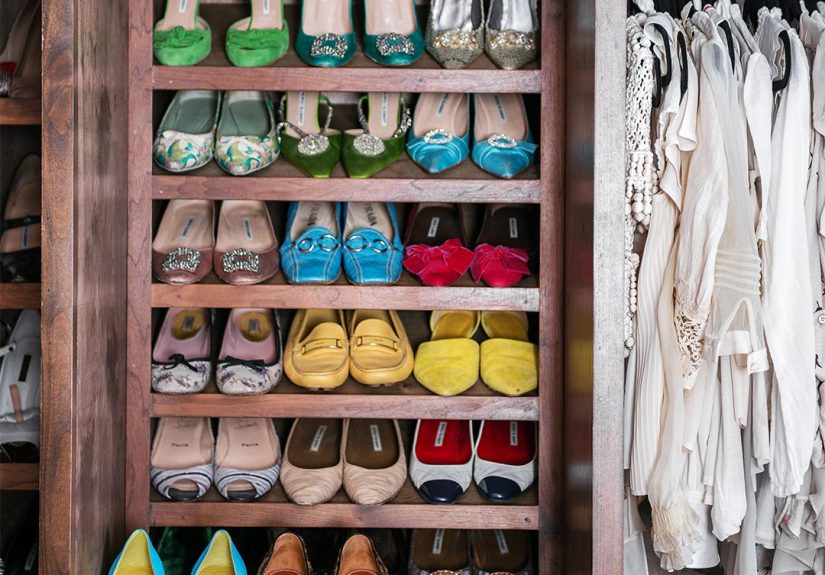
24) Put daily shoes at eye level or near the floor front
Your most-worn shoes should be easiest to grab. Save higher shelves for occasional pairs so you’re not climbing like a mountain goat
for sneakers.
25) Try a vertical shoe rack for small spaces
Tall, narrow racks store more shoes without eating your floor. Great for closets where width is limited but height is available.
26) Use clear shoe boxes (or labeled boxes) for seasonal pairs
Boots in summer, sandals in winterstore them clean and dry. Clear boxes help you remember what you already own.
27) Add under-shelf baskets for flats and slippers
Under-shelf baskets are perfect for slim shoes and accessories. They take advantage of unused vertical space and keep pairs together.
28) Use a boot shaper hack to keep tall boots upright
Boot shapers, pool noodles, or rolled magazines can help tall boots hold their shape and avoid creasing.
Accessories: The Stuff That Multiplies When You’re Not Looking
29) Use a scarf hanger or ring hanger to prevent tangles
Scarves stay visible, unwrinkled, and easy to grab. If you can’t see them, they become decorations for the back of a drawer.
30) Store jewelry where it won’t knot into a “mystery rope”
Use a small drawer insert, a hanging jewelry organizer, or a tray. Separate necklaces so they don’t turn into one mega-necklace.
31) Give bags structure (and boundaries)
Store handbags upright with shelf dividers, or in clear bins by size. Use hooks for everyday bags so they don’t slump into a pile.
32) Corral belts with a dedicated hook, rod, or drawer divider
Belts behave best when they have their own lane. Hang them in a row or file them in a compartment so you can see options instantly.
Closet Upgrades That Feel Custom (Even on a Budget)
33) Consider an adjustable closet system when your needs keep changing
Modular systems let you adjust shelves, drawers, and rods as your wardrobe evolvesmore space for workwear now, more storage for
athletic gear later, and so on.
34) Try timed organizing sessions so you don’t burn out
If organizing makes you want to lie down dramatically on the bed, use short timer-based sessions (like 25 minutes) to keep momentum
without turning it into an all-day event.
How to Keep It Organized (So This Isn’t a “One-Weekend Miracle”)
A tidy closet is a system you can maintain, not a photo shoot you can’t touch. Here are a few quick habits that protect your progress:
- Do a weekly 2-minute reset: hang strays, return shoes, empty pockets into a small tray.
- Adopt “one in, one out” for problem categories: tees, jeans, sneakers, and reusable totes that sneak in like ninjas.
- Seasonal swap twice a year: rotate off-season items to top shelves or bins so prime closet space stays functional.
- Keep a “tailor/repair” pouch: missing buttons and small fixes don’t have to become lifelong mysteries.
500+ Words of Real-Life Experiences: What Actually Works in Closets
In real homes, the most successful closet organization setups usually share one thing: they match how people actually behave on a
Tuesday morning. The dream is a perfectly color-coded closet with identical hangers and museum lighting. The reality is you’re juggling
a phone, a coffee, and the sudden realization that the shirt you want is “somewhere” but apparently not in this dimension. So the
systems that last tend to be the ones that make “putting things away” easier than “dropping them on a chair.”
One of the most common turning points happens when someone stops organizing by aspiration (“I’m going to wear blazers every day!”) and
starts organizing by routine (“I wear denim and tees five days a week.”). Once the everyday clothes move to the most accessible rod and
shelf space, mornings get faster immediately. People often describe it as a tiny life upgrade that’s oddly emotionalbecause it removes
a small but constant friction point from the day. It’s not just tidier; it’s calmer.
Another experience that comes up again and again is the “bin trap.” Folks buy a stack of bins, feel accomplished, and then… the bins
become clutter containers. The fix is simple but surprisingly powerful: fewer bins, clearer labels, and a rule that every bin holds one
category only. When someone changes “Accessories” into “Belts,” “Gym Headbands,” and “Winter Gloves,” the closet stops eating items.
Suddenly, you can find what you need without dumping everything out like you’re panning for gold.
Small closets bring out the most creative wins. People who succeed in tight spaces usually embrace vertical storage (over-the-door
organizers, hooks, stacked shoe racks) and reduce visual noise (matching hangers, consistent bins). The effect is immediate: the closet
looks bigger because the shapes and lines are cleaner. It’s the same stuff, just behaving better. And once the closet feels less
chaotic, people are more likely to keep it that waybecause opening the door doesn’t trigger a stress response.
Seasonal swaps are another “surprisingly life-changing” practice. Many people resist at first because it sounds like extra work. But
after they do one swappulling winter coats forward and boxing up summer sandalsthey realize it’s actually a shortcut. The closet
becomes a curated selection of what’s relevant right now. That reduces decision fatigue, prevents overstuffing, and makes it obvious
what’s missing (or what’s been ignored for years). It also pairs perfectly with a donation bag: as the seasons change, so does your
willingness to admit that certain items are not coming back into your rotation.
Finally, the most durable systems usually include a “messy-but-contained” zone. Real closets need a place for the in-between items:
the jeans you’ll rewear, the hoodie you’ll grab after school or work, the bag you used yesterday. When people add a basket or a single
hook for these transition items, the closet stays tidy without demanding perfection. And that’s the real goal: a closet that supports
your lifeeven when your life is moving fast.
Conclusion
Closet organization isn’t about having less stuff (though that helps). It’s about giving your items a clear, easy “home,” then making
the tidy choice the lazy choice. Start with zones, upgrade your hanging strategy, contain the small stuff, and keep a donation bin in
plain sight. Add a little breathing room, a little lighting, and a quick maintenance routineand your closet will finally stop acting
like a prank show.